.jpg) |
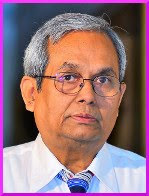
| Brother Ronald Drahozal, C.S.C., founder-director of the APON |
Photo courtesy: The Protom Alo daily, Dhaka. All other photos below @ courtesy of the APON.
Brother
Ronald Drahozal, C.S.C. – a U.S. member of the Congregation of Holy Cross
involved in Bangladesh as missionary for the last 50 years – founded the Ashokti Punorbashon Nibash (APON) or the
Addiction Rehabilitation Residence in Dhaka, Bangladesh, on October 1, 1994,
with only one recovering drug addict. Under his direction and perseverance, the
APON has grown from a tiny organization to an influential one known all over
Bangladesh as well as some countries abroad. Presently, it is serving more than
230 drug addicts, aged five years to 55 years.
The APON, under the jurisdiction of the
Brothers of Holy Cross in Bangladesh, strongly believes that “all addicts have a basic right to good
health including treatment and rehabilitation for drug addiction. Therefore,
our program is open to all drug addicts” – adult males and females as well
as boys and girls – “without distinction of social, economic, religious, gender
and age.” The APON also came to learn from its experience that “An addict is sick, not bad, not mad. An
addict needs help to become well, not to become good or sane.”
The
APON is a local non-government organization (NGO), registered with the
Government of Bangladesh. It is the second effort, on behalf of the Catholic
Church of Bangladesh, to treat and rehabilitate drug addicts. The First effort
of this Church was that the Bangladesh Rehabilitation and Assistance Centre for
the Addicts (BARACA), founded in 1988 and directed by Brother Ronald Drahozal
until 1994. The BARACA later became a project of Caritas Bangladesh.
First
headquartered in Mohammadpur of Dhaka and later moved to APONGAON at Singair in
Manikganj District, 63 kilometers north-west of Dhaka City, the APON developed
and has been using an innovative and special rehabilitation programme by
adopting the 12-step principles of the Alcoholics Anonymous/Narcotics
Anonymous, therapeutic community (TC) approach, APON family environment
approach, and other related activities. Drug addicts and alcoholics of any
religious persuasion and socio-economic status are accepted in its centre.
It
is noteworthy that the APON was the first organization to reach out to help female
drug addicts and collect data on their pervasive problems. In addition, the
APON was the first and still is the only organization with a special drug
rehabilitation programme for children, especially street children.
 |
| Residential buildings in Apongaon (at Singair, Manikganj District) |
With
money inherited from his family in the U.S.A., Brother Drahozal purchased a
three-acre land at Singair to make a permanent treatment and rehabilitation
centre, called APONGAON (APON village) for a comprehensive support to the drug
users. The Dutch-Bangla Bank, BRAC, Grameen Bank and Summit Group of Industries
came forward in funding the construction of two residential buildings there.
The Prothom Alo, a Bengali daily, has
been assisting Brother Drahozal in his awareness building programme among the
street children. In 2007, the headquarters of APON in Dhaka moved to this APON
village permanently. APONGAON is a residential facility for both male and
female adult and child drug addicts.
.jpg) |
| Brother Drahozal speaks on drug addiction and the role of the APON in a Diganta TV programme in Dhaka |
In
last several years, the APON and APONGAON have received wider media coverage in
the Bangladeshi newspapers, magazines, radio and television as well as some news media abroad the UCANews of Hong Kong, and ABC Radio, and BBC radio and TV.
.jpg) |
| The APON gets a coverage in The Independent daily of Dhaka (Oct. 7, 2012) |
Activities of the APON
- The
APON provides drug dependency treatment and rehabilitation.
- It
disseminates information on drug addiction treatment and rehabilitation,
sexually transmitted infections (STI), human immunodeficiency virus/acquired
immune deficiency (HIV/AIDS), hepatitis B and C, and other related harms with Information
Education and Communication (IEC) materials and awareness programme and
outreach activities and peer-led intervention.
- It
gives basic education, skill training and relevant knowledge for employment of
recovering addicts.
- Recovering
drug users also receive aftercare and follow-up services.
- It
advocates in the national level to establish the legal rights of the drug
addicts for treatment services as mentioned in the Control Act of 1990.
.jpg) |
| Brother Drahozal and his activities with the APON gets a publicity in the Prothom Alo daily of Dhaka |
Outreach Drop-In Centre/Safe
Night Shelter (ODIC/SNS) for Street Children
From
2012, the APON started an Outreach Drop-In Centre/Safe Night Shelter in Mirpur
1, Dhaka, with assistance from the Colombo Plan Secretariat. This programme
serves drug addicts aged 4 to 14 years. Brother Drahozal writes in a report
that, in Dhaka city alone, the number of street children ranges from 300,000 to
500,000. About 49.2% of these children are under the age of 10. Most of these children are using drugs. As long as they continue to live on streets, they
“continue to be involved in obsessive activities and use addictive drugs.
Most
street kids start with watching video games and smoking cigarettes. Gradually
they fall for sniffing dandy/glue, smoking ganja (cannabis),
taking sleeping pills and alcohol, and, eventually, some injecting drugs,
smoking heroin and yaba/baba, and getting involved in illicit
sex. “In order to find funds many do some basic work, stealing at times, others
rent their body for sex, selling and/or trafficking drugs or in some way
‘manage’ funds.” This vicious circle continues.
In
this drop-in centre, children, from 8:00 a.m. to 5:00 p.m. receive care, such
as medical attention, basic education, skills training, bath, food (tiffin and
lunch), awareness orientation on addiction and AIDS, and recreation (TV and
indoor games). They also increasingly become aware of the harms that drugs
bring and receive motivation for being drug free. Those, who are ready to stop
using drugs or are willing to do so, are sent to APONGAON Centre for their undergoing
rehabilitation. So far, more than 10 serious drug user street children have
been sent there.
The
Brother has a plan to have a safe night shelter for these children in future. He
is also advocating for Bangladesh Government attention to and assistance for under-18
“Most At Risk Adolescents” (MARA), who are drug addicts but will be adults soon
and most likely to acquire HIV/AIDS. If these street children are not taken
care of, they will be causing more harms to the society at large in future.
The Staff
Most
of the staff at APONGAON are former drug addicts, who underwent rehabilitation
from the APON. Some of these staff have been trained at the Self Enhancement
for Life Foundation (SELF), a drug rehabilitation programme in the Philippines
using a dual approach therapeutic community programme.
The General Council and
Executive Committee of the APON
The
APON has a General Council and an Executive Committee whose members – both male
and female – come from different professions. They assist Brother Drahozal in
the management of the APON.
Participation in
International Events
Brother
Drahozal participated in a number of international events. Some of these are: The
Sixth Asian Recovery Symposium in New Delhi, India; Outreach Drop-In Centre
training by the Colombo Plan in Davao, the Philippines; SELF Rehabilitation
Centre near Manila, the Philippines; and the World Congress of Therapeutic
Community in Bali, Indonesia. In some of these events, a few APON staff also
participated.
 |
| Raju Cruze, a recovering addict and a participant from APON, Father Somar of Indonesia, and Brother Ronald Drahozal, CSC, at the World Conference of the World Federation of Therapeutic Community in Bali, Indonesia. Brother was one of the guest speakers in the conference. |
Receipt of Awards
The
APON received certificates and commendations for participating in local drug
prevention awareness programmes and fundraising.
.jpg) |
| Former St. Gregory's High School students of 1967 along with the APON organized the First Annual Run/Walk 2012 on December 28, 2012 as part of a drug free society and drug awareness programme in Dhaka |
The APON also received the first Best Drug Rehabilitation Centre Programme recognition in Bangladesh.
.jpg) |
| Bangladesh Home Minister Mohiudding Khan Alamgir presents a crest to Brother Drahozal (left) on the International Day Against Drug Abuse in Dhaka on June 27, 2013 |
Background
In
1987, some Brothers of Holy Cross and others noted an increasing number of drug
addicts in Mohammadpur and Tejgaon areas of Dhaka. They were thinking aloud as
what they could do to address this problem among the youth.
Although
he had no previous knowledge about drug addiction and rehabilitation, Brother
Ronald Drahozal, C.S.C. expressed his willingness to work in this field. As a
result, in 1988, he became the founder-director of the BangladeshRehabilitation and Assistance Centre for the Addicts (BARACA), the first such
effort on behalf of the Catholic Church in Bangladesh. He directed the BARACA
from 1988 to 1994. When Caritas Bangladesh took over this project fully,
Brother Drahozal left the BARACA and founded the APON on October 1, 1994. As
work went on, he had exposure to several drug rehab centres with the country
and abroad, attended seminars and conferences on drug treatment and
rehabilitation.
Brother
Ronald Drahozal was born in Cedar Rapids of Iowa, U.S.A. in 1937. He took his
profession of vows as a Brother of Holy Cross in 1958. He studied at St. Edward’s
University in Austin of Texas, U.S.A.
He
arrived in East Pakistan (that later became Bangladesh) in 1962. He taught at
St. Gregory’s High School in Dhaka and St. Nicholas’ High School at Nagori of
Gazipur District. He directed a special spiritual and human development course
for six months each year for eight years for diocesan seminarians at Jalchatra
of Tangail District. He also served as the director of the programme for
candidates who wanted to join the Brothers of Holy Cross in Bangladesh. Some of
the present-day Bangladeshi Brothers who are in leadership positions are his
former students.
Besides
running the APON and APONGAON, Brother Drahozal also gives talks on drug
addiction and rehabilitation to different groups, speaks in seminars and
conferences – both within Bangladesh and abroad, presents papers, writes
articles, and appears in talk shows in both local and foreign radio and TV in Dhaka.
Once
a tall, lithe, and sprightly gentleman, Brother Drahozal is now a bit gaunt and
slow, yet has enough stamina for working long hours.
According
to Brother Drahozal, a childhood experience of his might have been behind his
dedicated service to the drug addicts in Bangladesh. His parents were always
helping the needy in their neighborhood. Once during a Christmas season, his
mother took young Ronald Drahozal to the house of a man, who was both
impoverished and drug-addicted. When the man opened his door, she presented him
with a new set of clothes as a Christmas gift. The man was extremely grateful
and happy. Brother still remembers this incident vividly.
Also see in Youtube's video the Diganta TV's Feature on APON.




.jpg)
.jpg)
.jpg)
.jpg)

.jpg)
.jpg)
.jpg)
.jpg)

.jpg)
.jpg)
.jpg)
.jpg)


.jpg)
