Showing posts with label Holy Cross Priests. Show all posts

Sunday, September 13, 2020

Missionary, Humanitarian, and Human Rights Worker Father Richard W. Timm, CSC, Dies


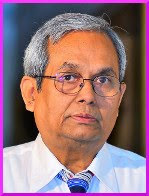
Father Richard W. Timm, CSC
Photo courtesy via Dhaka Tribune

xxx
Bangladesh minister Mizanur Rahman Chowdhury
(left)givingAbu Sayeed Chowdhury Award
 for human rights to Father Richard W. Timm, CSC

Photo courtesy: the dailystar.net/


Father Richard William Timm, CSC (1923 - 2020), an American missionary priest, educator, humanitarian, and human rights worker in Bangladesh died of old-age complications in South Bend, Indiana, USA, on September 11. He was 97 years old. He worked in Bangladesh for 65 years. 

First, he came to Bangladesh in 1952 as a professor at St. Gregory's College (the precursor of Notre Dame College) and did further study and research on nematodes. He discovered a few unknown types of nematodes, one of which was named 'Timmia parva' (small Timmian worm) after him. 

Later he was the principal of Notre Dame College, served 1970-cyclone affected people in Monpura Island in the Bay of Bengal through a voluntary organization called 'HELP.' He also served the 1971 liberation war-affected people as the Planning Officer of the Christian Organization for Relief and Rehabilitation (CORR), which later was renamed Caritas Bangladesh. 

He founded and became Secretary of the Episcopal Commission for Justice and Peace in Bangladesh. Through this Commission, he worked relentlessly for the human rights of ordinary people in Bangladesh. 

Father Timm was also the author of several books. Among the books are -- a textbook on college biology (this book's name is not known to us now),  The Plant-Parasitic Nematodes of Thailand and The Philippines (SEATO: 1965), The Church and Development in Bangladesh (Dhaka: Caritas Bangladesh, 1994), On Building A Just Society (Dhaka: Caritas Bangladesh, 1994), Forty Years in Bangladesh: Memoirs of Father Timm (Dhaka: Caritas Bangladesh, 1995), History of Holy Cross Priests in Bangladesh Since Independence: 1971 - 2000 (Dhaka: Provincial, Holy Cross Fathers, 2000), and 150 Years of Holy Cross in East Bengal Mission (Dhaka: Congregation of Holy Cross, 2003). 

After being the only nematologist in Bangladesh, he, in the 1950s and 1960s, wrote over 70 scientific papers. 

He was the recipient of a number of honours and awards. Among these are The Abu Sayeed Chowdhury Award for human rights in Bangladesh, the Pro Ecclesia et Pontifice (For the Church and the Pope) award from Pope Paul VI (1978) for his service to the 1971 war-affected people of Bangladesh, the Ramon Magsaysay Award (1987), a medal from the Pontifical Council for Justice and Peace of the Vatican in recognition of his contribution to education, charity, justice, and peace in Bangladesh (2009), and honorary citizenship of Bangladesh from the government.

To know more on Father Richard W. Timm, CSC, please read the following:


Bookmark and Share

Wednesday, October 3, 2018

Father Richard J. Novak, C.S.C: A U.S. Missionary Killed In A Hindu-Muslim Riot In East Pakistan in 1964


A book on the life of U.S. Holy Cross missionary
Father Richard J. Novak, C.S.C. (1935-1964),
a professor at Notre Dame College, Dhaka 
Image courtesy: amazon.com/

Father Richard J. Novak, C.S.C. (1935-1964) was an American Congregation of Holy Cross missionary priest to the then East Pakistan (called Bangladesh after the independence from Pakistan in mid-December of 1971). On completion of his priestly studies in Le Mans, France, Dhaka's then-Archbishop Lawrence Leo Graner, C.S.C. ordained him there on June 29, 1961. 

In 1963, he went to East Pakistan as a missionary. After studying Bengali for a short time in Barisal, he began to teach Logic at Notre Dame College in Dhaka. From the beginning, he was deeply interested in the local people and their language and culture. 

"He was very friendly and likable and showed his unmistakable interest in people...He got around to more places than most of our men who have been there for many years. People everywhere still remember him. I used to worry about him, though, because it seemed to me that his liberal spirit was liable to get him into trouble sooner or later," wrote Father Richard Timm, C.S.C., a fellow missionary, and professor at Notre Dame College, on Feb. 6, 1966. 

 In early 1964, there was a Hindu-Muslim riot in India and Pakistan. In East Pakistan, the riot was severe in Hindu-populated Narayanganj and Khulna. Some Hindu riot victims were being treated at Holy Family Hospital in Dhaka. On January 15, Father Novak went to the hospital and wanted to extend his assistance. When a Hindu nurse-trainee at the hospital asked an American nun if there was anyone to help locate her father in Narayanganj where he worked at the Dhakeswari Cotton Mills, Father Novak was told of the request. Next day, on January 16, Father Novak, risking his life, bicycled 10 miles distance to Narayanganj and tried to cross the river on a ferry to reach the mills. On the boat, some Muslim youths attacked him and, on reaching the other side, killed him with lethal stabs and threw his corpse to the river. 

From that day news on his whereabouts was unknown in Dhaka for eight days. Then, some local Muslims from Narayanganj came to Dhaka and gave the Notre Dame College priests the terrible news. 

On the occasion of the remembrance of Father Novak in Johnstown, Pennsylvania, USA, on January 27, 1964, Father Arnold A. Fell, C.S.C., wrote: "There is a sort of perfect unity in Father Richard's life in that, as far as we know, he also met death, like Christ, in the midst of the people he had come to help and succor. And from what we know he also met death on an errand of mercy, trying to help those who were threatened by the communal Hindu-Moslem riots that were raging in and around Dhaka...in the fuller, deeper sense of the word, 'a martyr is one who dies giving witness to Christ.' In this full, deep sense Fathe Richard Novak died a martyr." 

For more on Father Richard J. Novak, please read the following:


Bookmark and Share

Saturday, September 30, 2017

Father Benjamin Costa Is Critically Sick, Needs Your Prayers


(L-R): Jerome D'Costa, blogger of the BANGLADESH CANADA AND BEYOND blog, and his friend Father Benjamin Costa, C.S.C., Acting Vice-Chancellor of Notre Dame University Bangladesh at the Mathis House of Notre Dame College, Dhaka, Bangladesh, on July 17, 2017
Photo by Dominic Rozario

The initial report received here says that Father Benjamin Costa had got chikungunya virus attack as a result of a certain type of mosquito bite, resulting in headache, muscle pain, swelling of joints and more. Later he got lung complications followed by breathing difficulty, for which he was in Square Hospital in Dhaka for three weeks. 

As his condition was getting severe, he, on September 28, on emergency basis was rushed to Mount Elizabeth Hospital in Singapore by an air ambulance. Father James Clement Cruze, C.S.C., the Provincial of the Fathers of Holy Cross in Bangladesh, accompanied him.

A prayer request has been made for an early recovery of Father Benjamin Costa, C.S.C. to his fellow priests-Brothers-Sisters, friends, acquaintances, Bangladesh Notre Dame College and University professors and students.

Since the establishment of Notre Dame University Bangladesh in the Fall of 2014, Father Benjamin Costa, C.S.C., has been acting as the Vice-Chancellor until mid-August of this year. Then, Father Patrick Daniel Gaffney, C.S.C., a U.S. Holy Cross priest and Associate Professor of English in the same university, became the new Vice-Chancellor. 

The Latest on Father Benjamin Costa's Situation:

According to Father James Cruz's emails to Cardinal Patrick D'Rozario, and forwarded to me, doctors in Singapore did two bronchoscopies on Father Benjamin Costa and "ventilation has been changed from mouth to throat. He is still stable. Doctors will say more on Sunday. He has been given high antibiotics." Father Cruz also says that Father Benjamin Costa's blood pressure and heart beat "are fine. Kidney is also good. Because of lung infections lung-support machine is helping him to breathe. Please continue to pray for him."

Further Info on Father Benjamin:

Father James Clement Cruze, C.S.C., who had accompanied Father Benjamin to Singapore, returned to Dhaka and Father Shital Hubert Rozario, C.S.C., took his place. Father Cruze writes in an October 8 e-mail to Cardinal Patrick D'Rozario: "The present situation of Father Benjamin remained the same. No change. He is in ventilation. Lung infection is grave. Doctor could not find out, either it is recoverable or not. They have done 2nd-time bronchoscopy and his ventilation has been changed from mouth to throat. He is being given high antibiotics. Doctors wanted few days more to give their opinions. Thank you so much for your prayers and support. Please continue to pray for him."


(Updated on September 30, 2017 at 10:40 p.m.)
(Updated again on October 6, 2017 at 12:40 p.m.)
  (Updated again on October 9, 2027 at 12:05 p.m.)  

Bookmark and Share

Monday, November 7, 2011

Four Catholic Educational Institutions in Dhaka Receive 2011 Govt. Award for Excellence


St. Joseph's Higher Secondary School
at Mohammadpur, Dhaka


Four Catholic educational institutions in Dhaka recently won Bangladesh government’s prestigious award for outstanding achievements in 2011. The award is given on the basis of “study environment, academic performance, attendance and discipline,” reports UCANews.

Notre Dame College, St. Joseph Higher Secondary School, Holy Cross College and Holy Cross Girls’ High School were ranked 5th, 6th, 8th and 13th respectively in this year’s ‘Top 20 Educational Institutes Award’ given by the Secondary and Higher Education Board of the Government of Bangladesh. 

Holy Cross priests run the Notre Dame College (founded in 1949), Holy Cross Brothers run St. Joseph Higher Secondary School (founded in 1954), and Holy Cross Sisters run both the Holy Cross College (founded in 1950) and Holy Cross Girls’ High School (founded in 1951). 


Bookmark and Share

Friday, September 10, 2010

The 'Pratibeshi' Editorial Was the First in Proposing the Start of Archbishop Ganguly's Canonization

_


The October 16, 1977 editorial
in the Pratibeshi weekly of Dhaka


The first Bangali (Bengali) Archbishop Theotonius Amal Ganguly, CSC, died of heart attack on September 2, 1977. Hundreds and thousands of people of all faiths paid a respect to him on the grounds of the Archbishop's House in Dhaka. Many people were expecting even before his burial that the canonization process start soon.

The national Catholic weekly Pratibeshi was the first official voice to echo the expectation of the people. In its editorial of October 16, 1977, the Pratibeshi proposed that the canonization process -- at least, in the form of gathering information on the Archbishop -- be started soon after the installation of the new archbishop.

Upon my return from U.S. studies, I had joined the Pratibeshi as the Executive Editor in early September, 1977. I was fortunate enough to write the editorial of October 16 (the original Bangla (Bengali) editorial is shown above). The English version of this editorial is provided below:

The Proposal for Beatifying the Archbishop


Archbishop Theotonius Amal Ganguly, CSC, a virtuous person, died only at the age of 57. He was faithful in living his life following Christian ideals. He left excellent examples of his saintliness and other virtues in every aspect of his life. People of all faiths and ethnic groups were attracted to his pleasant behaviour and action and they were very respectful of him.


During his earthly life, certain persons used to call him a "living saint." We believe that after his death, this country needs him to be a declared saint. There are probably many Bangladeshis who are enjoying the bliss of heaven as unproclaimed saints, but for the strengthening of our faith and for imitating his ideals, we have the need for a proclaimed saint. His affirmation as a saint will also prove that the Church in Bangladesh is also firmly placed.

The first step in the canonization process is the beatification. This work starts with studies of the candidate's life, writings and heroic application of his virtues as well as intensive investigation of at least two miracles that God accomplishes through his intercession. If proven true, the Pope publicly declares the candidate a "Blessed." After this, the Church canonizes the candidate after further satisfactory investigation.

The beatification of a person is quite hard and time-consuming affair. If the local Church starts the beatification process in earnest from the very beginning, the burden of the work becomes easier. To start this work, it is imperative that a committee of appropriate persons be formed. It will not function if the work is done being charged with emotions, but it needs to be completed with sufficient prayer, patience and judiciousness. The committee will need sincere prayers and financial contributions from the faithful. We believe that there won't be any dearth of cooperation from the faithful if the beatification of Archbishop Ganguly is initiated. We, therefore, appeal to the local Church authority to actively consider this matter after the installation of the new archbishop.

In reality, the Arcbishop Ganguly's canonization process started in 2006 after 29 years of this editorial. Although late, it is better than doing nothing!

Let us pray and make every effort in getting Archbishop Ganguly canonized for the greater good of the Bangladesh Catholic Church.


Bookmark and Share

Thursday, September 2, 2010

Archbishop Theotonius Amal Ganguly, CSC, in Photos


Today is the 33rd death anniversary of Archbishop Theotonius Amal Ganguly, CSC. The cause of Archbishop's canonization is already on. Bangladeshis, one day, wish to see him declared a "saint."

For the readers of this blog, we present below some interesting photos on the life of Archbishop Ganguly.


Archbishop Ganguly as a boy
at Hashnabad, Dist. Dhaka
, Bangladesh


Photo courtesy: Province Review (October, 1977),
published by Priests of Holy Cross, Indiana Province,
Notre Dame, USA


Archbishop Ganguly as a young priest
(date and place unknown)


Photo courtesy: Province Review (Oct., 1977), as above


(L-R) Archbishop Lawrence Leo Graner, CSC, Father John VandenBosche, CSC,
Father George Pope, CSC, consecrator Cardinal Agaginian,
and newly-consecrated Bishop Theotonius A. Ganguly, CSC,
imparting his special blessing at St. Mary's Cathedral,
Ramna, Dhaka (October 7, 1960)


Photo courtesy: Province Review (Oct., 1977), as above


Bishop Ganguly with some Bangali Catholics in Bangladesh
(Date, place and event unknown)


Photo courtesy: Province Review (Oct., 1977), as above


Archbishop Ganguly in one of his poses during a speech at a function
at Notre Dame College auditorium, Dhaka
(date and event unknown)


Photo courtesy: Province Archives Centre, Notre Dame, Indiana, USA


Archbishop Ganguly speaking to Notre Dame College students
(date and occasion unknown)


Photo courtesy: Province Archives Centre, Notre Dame, Indiana


(L-R) Father Benjamin Costa, CSC (presently, Principal of Notre Dame
College, Dhaka); Father (later, Bishop) Joachim Rozario, CSC;
Father Dominic Rozario, CSC; Archbishop T. A. Ganguly, CSC;
and an American Holy Cross priest (date, place and occasion unknown)


Photo courtesy: Province Archives Centre, Notre Dame, Indiana

Bookmark and Share

Friday, September 4, 2009

Archbishop Theotonius Amal Ganguly, C.S.C.: Servant of God - 3

_

( L-R: Second from left) Archbishop T. A. Ganguly, C.S.C. of Dhaka,
Bishop Michael Atul D'Rozaio, C.S.C. of Khulna and Bishop
Joachim Rozario of Chittagong met with Prime Minister
Bangabandhu Sheikh Mujibur Rahman of the
newly independent Bangladesh (first from left)
on February 2, 1972 and donated a cheque for
200,000 takas and his episcopal gold chain
and cross for post-independence-war relief
and rehabilitation work in Bangladesh

Photo Courtesy: The Pratibeshi (weekly), Dhaka

My Experience with Archbishop Ganguly

I had the opportunity of knowing Archbishop Theotonius Amal Ganguly, CSC, personally when I was a seminarian at St. Joseph's Intermediate Seminary at Ramna, Dhaka, in 1964-1966, and later in other places at various occasions. As a seminarian, I sometimes served his Mass, heard his sermons, prayed and meditated together, and had interacted with him.

To me,

  • He was a man of faith: Faith had a strong foundation in him. Faith was a guide in his life. His thoughts, words and actions gave witness to his deep faith in God.
  • He was a man of prayer: Prayer was an integral part of his life. He drew strength and inspiration from his prayers. Daily in the morning he would be in the cathedral chapel for meditation and Mass and in the afternoon he would spend an hour or so in prayer in the same chapel.
  • He was a humble and gentle man: His very humility and gentleness were virtues that attracted people of all faiths to him like a magnet. He was a bright student, an intelligent and learned man, the first Ph.D. in the Bangali Christian community, yet he never displayed a speck of pride about it. He hardly hurt anyone with his word or deed. Once a person encountered with him, he or she could never forget that positive experience.
  • He was a pastoral man: As the bishop and archbishop, he was mindful of his pastoral responsibilities. He regularly visited the faithful in different parishes and looked after their pastoral needs. After the Second Vatican Council (1962-1965), he made a lasting contribution in translating and introducing the required materials for vernacular (Bengali) liturgy in place of Latin.
  • He was a man of compassion and love: His profound compassion and love compelled him to go from place to place to assist the suffering and needy, to provide hope and encouragement to the hopeless, and to right the wrong. Along with Bishop Joachim Rozario, C.S.C., of the Diocese of Chittagong, he played a vital role in founding Caritas Bangladesh, the humanitarian arm of the Catholic Bishops' Conference of Bangladesh. He also gave a tremendous support to the people of all faiths who suffered in the hands of the West Pakistani army and became refugees within East Pakistan (now Bangladesh). He allowed all Catholic parishes and educational institutions to open up their compounds for giving shelter and an all-out support to many of these internal refugees.
  • He was a holy man: In some persons, holiness is most graphic, in others it is less recognizable. His thoughts, words, and actions mirrored his holiness and people could see and feel this holiness. He oozed holiness, so to say. His holiness changed many a hearts for the better.
  • He was a considerate man: Anyone who wrote him a letter, received his reply -- long or short -- immediately or even a little delayed. In spite of his busy schedule, he would not keep a person waiting indefinitely for his reply.
  • He was a respectful person: He respected all -- young and old, rich and poor, and Catholic and non-Catholic. His respect for others always came back to him as a reciprocal respect from others.
  • He was an austere man: He lived a life of austerity. His residence, his furniture, and his clothing and other personal effects were as simple as anything. He preferred very simple meals. He was never a 'prince' of the Church, but a pauper. He always availed of the second or third class compartment in the trains and motor launches while going to other towns and villages. In Dhaka city, he used a beaten up car, 'unsuitable' for a bishop or archbishop.
  • He was a man of his words: There was such a profound inter-mixture of his words and deeds that one could not but marvel at him. He himself did what he said. He always kept his word in spite of personal difficulties.
  • He was a man of inspiration and encouragement: He always inspired and encouraged the youth -- both male and female -- to give leadership in their own spheres. As a result, many Catholic youth organizations came into being, especially after the Bangladesh War of Independence in 1971.
  • He was a man of forgiveness: Jesus' words that one should forgive another person seventy times seven was conscientiously followed by Archbishop Ganguly. Because of his simple and humble demeanor, certain persons from the laity, clergy and Religious, sometimes hurt him verbally and behaviourally, but he was calm and patient in that situation and bore the pain in silence. He was never a reactive person.
May the Servant of God Theotonius Amal Ganguly be a saint and intercede for us more and more.

(L-R) Mr. Brian Kenneth Good, newly-consecrated Bishop
T. A. Ganguly, C.S.C., and Professor Robert Gomes
at a reception in Dhaka

Photo Courtesy: Holy Cross Archives, Notre Dame, Indiana, USA

(The End)


Bookmark and Share

Thursday, September 3, 2009

Archbishop Theotonius Amal Ganguly, C.S.C: The Servant of God - 2

_

Father Theotonius Amal Ganguly, C.S.C.,
as the first Bangali Bishop in 1960

Photo Courtesy: Holy Cross Archives, Notre Dame, Indiana, USA

Entering the Congregation of Holy Cross and Returning Home

As Father Ganguly was interested in entering the Congregation of Holy Cross, he was sent to the Novitiate of the Fathers of Holy Cross in Jordan, Minnesota, USA. After one year, on August 16, 1952, he made his Religious Profession and in October he returned to Dhaka.

On his return, he was appointed a professor of Logic and English at Notre Dame College, founded by the Fathers of Holy Cross in Dhaka in 1949. In 1954, he became the Dean of Studies and, in 1958, the Vice Principal of the college. On March 21, 1960, at the sudden death of Father James L. Martin, CSC, Father Ganguly succeeded him as the principal. He was the first Bangali to hold the position. Students and other professors alike loved him and appreciated his skills.

Consecration as the First Bangali Bishop

On September 13, 1960, Pope John XXIII nominated Father Ganguly as the Auxiliary Bishop of Dhaka, where Most Rev. Lawrence Leo Graner was the archbishop. He took Deus Adjutor Meus (God is my helper) as his motto. On October 7, 1960, Cardinal Gregory Peter Agaginian, Prefect of the Congregation for the Propagation of the Faith in the Vatican, consecrated Father Ganguly as the new local bishop. Hundreds of priests and Religious and thousands of Catholic faithful were present at the ceremony at St. Mary's Cathedral in Dhaka. It was a watershed event in the 400-year history of the Catholic Church in Bangladesh.

Elevated to the Position of the Archbishop

In the early 1960s, there was a riot situation in the northern districts of the then East Pakistan (now Bangladesh) between Bangali Muslims and ethnic Garos (Mandis) and Hajongs. Due to land grabs and other forms of persecution, backed by provincial and local administrations, thousands of these minorities, mostly Christians, left their homesteads and became refugees in the Meghalaya State of India.

Archbishop Graner, who was an Americn, had personally visited the affected areas at the initial stage and requested Governor Monem Khan (belonging to the Muslim League Party) in Dhaka to take immediate action before the situation gets worse. In spite of reminders, the government failed to take appropriate action. The archbishop then had to take recourse to publicizing the sad plight of these ethnic groups in his pastoral letter in the Pratibeshi, the diocesan Catholic newspaper published from Dhaka.

The pastoral letter drew world attention in the United Nations in New York and Pakistan government was unhappy with Archbishop Graner. As a result, he was denied the renewal of his visa. He was told that he could leave the country but could not return. Moreover, Archbishop Graner's whereabouts within the country was under constant government surveillance. In such a suffocating situation, on July 6, 1965, Bishop Ganguly was named the Coadjutor Archbishop with the right to succeed the Archbishop of Dhaka.

After Archbishop Graner left East Pakistan on November 23, 1967, Archbishop Ganguly took over the responsibility of the Archdiocese of Dhaka. When Archbishop Graner formally resigned from his position, Bishop Ganguly was installed as the new Archbishop of Dhaka. He was the first Bangali Archbishop, too.

Sudden Death

As the Archbishop, he made an enormous contribution to the Catholic Church in Bangladesh as a whole and the Archdiocese of Dhaka in particular. In thick and thin, he carried out his responsibilities relentlessly. This burden of responsibility was affecting him physically, too. On September 2, 1977, Archbishop Theotonius Amal Ganguly died of a sudden heart failure at the age of 57 years. The Christian community of Bangladesh was shocked to learn of the untimely death of their dear archbishop.

Condolences were offered from within the country and abroad. On September 4, 1977, Bishops, foreign ambassadors, government officials, hundreds of priests and Religious, and thousands of people of all faiths were present at his funeral at the Archbishop's House, Dhaka. All of them were grieving the death of a holy man.

I am happy at the concrete initiative taken for the canonization process of Archbishop Theotonius Amal Ganguly, who will ultimately receive a profound recognition for his holy and virtuous life. May he be a beacon of light and hope for people of all faiths.

Bookmark and Share

Wednesday, September 2, 2009

Archbishop Theotonius Amal Ganguly, C.S.C: The Servant of God - 1

_

Servant of God Archbishop Theotonius
Amal Ganguly, C.S.C.
(1920-1977)

Photo Courtesy: The Lightning Studio, Tejgaon, Dhaka

September 2 is the death anniversary of Archbishop Theotonius Amal Ganguly, C.S.C. -- also known as Archbishop T. A. Ganguly. He was a popular and well-respected archbishop of Dhaka, Bangladesh. His humility and holiness attracted persons of different persuasions and faiths.

His Canonization Initiated

Immediately upon his death on September 2, 1977, there was a popular demand that his canonization process start as soon as possible. We have seen such a popular call when Pope John Paul II died on April 2, 2005. Among thousands of people gathered in St. Peter's Square in Rome for mourning the death of the pope, there were people raising up banners demanding "Santo subito" -- saint immediately!

After long 29 years, Archbishop Ganguly's canonization process started in 2006. Archbishop Paulinus Costa of Dhaka, on September 2 of that year, in an official ceremony at St. Mary's Cathedral in Dhaka, introduced the causes and opened the diocesan inquiry on Archbishop Theotonius Amal Ganguly, C.S.C.

The Process of Canonization

After the death of a person, a minimum of five years has to pass before taking up the causes of his or her canonization. The canonization process has several steps: (1) Servant of God, (2) Venerable, (3) Blessed, and (4) Saint.

First, the local Bishop of the diocese, where the subject of canonization belonged, writes an official letter, containing the life of the person, and seeks the Pope's permission to start the canonization process. After receiving the permission or no-objection from the Vatican, the local Bishop officially launches the introduction of the causes and the opening of the diocesan inquiry. The subject of canonization is then called the "Servant of God." The bishop also forms a diocesan tribunal where witnesses give testimonies to the Christian virtues of the person considered heroic. These are theological virtues (faith, hope and charity), cardinal virtues (prudence, justice, temperance and fortitude), and other virtues specific to the person's state of life. The tribunal also collects all available documents (the person's own handwritten, typewritten, and printed writings as well as other writers' books and writings on him or her).

On the completion of the diocesan process, the bishop sends all documentation to the Congregation for the Causes of Saints in the Vatican. The Congregation then studies them and, if satisfied at the heroic virtues of the person, issues a decree announcing him or her the "Venerable."

If the Venerable died a martyr's death, the Pope himself officially declares person a martyr through a decree and allows the beatification ceremony. After this, the person is called the "Blessed." If the Venerable died a normal death, the Congregation requires a proof of a miracle that has taken place through his or her intercession. The Pope himself gives recognition to the miracle and allows the Congregation to issue a decree for the beatification. After the beatification ceremony, the person is called the "Blessed." A feast day is also permitted to be observed in the Blessed's own diocese and certain other places.

In the last step, another miracle is required to be proven after the beatification. The Pope then asks the Congregation to prepare for the canonization of the person. The canonization ceremony confirms that the person is holy and is in heaven. He or she is then called the "Saint" and is allowed to be venerated throughout the Catholic Church.

Short Biography of Archbishop Ganguly

Archbishop Theotonius Amal Ganguly was born on January 18, 1920 at Hashnabad village under Our Lady of the Holy Rosary Church in the then Dhaka district, British India (now Bangladesh). His parents were Nicholas Komol and Romana Komola Ganguly. His father was a cook in Calcutta and mother a housewife in the village. Chubby-looking Theotonius was the second of the three brothers -- the eldest being Xavier and the youngest Anthony Bimol. His elder brother later became a doctor and practised in Calcutta and his younger brother was a contractor, member of the local Union Council, drama director and social worker.

He grew up under the loving care of his pious mother. From his childhood he used to assist his mother in her household chores -- sweeping the rooms and the yard, ironing clothes with a bottle filled with hot water, and drawing water from the nearby river. Daily prayers were an integral part of his family. From his young age he also began to attend daily Mass and assist the priest as an altar boy.

His Early Studies

With his elder brother, he began to attend the primary section of the Holy Cross High School at nearby Bandura village under the care of the Brothers of Holy Cross. He was an active and bright student who used to gain the first place in his class. He would all along get the highest marks in English, Bengali and Mathematics. He was also skillful in music, acting and recitation. His singing voice was quite popular in the area. At the school annual plays, twice he received prizes on singing and acting. Teachers would praise his brilliance in studies and gentle demeanor and ask other students to emulate them.

Entrance to the Minor Seminary

In 1937, when he was in grade VIII at the Holy Cross High School, he entered the minor seminary, called Little Flower Seminary, at Bandura. From his childhood he was interested in being a priest. At home he used to play 'Mass' with his mates by using a wooden stool as an altar, a towel as a vestment, and leaves as holy communion!

At the seminary he began his studies in earnest. On holidays, he would go to his village and help the parish priest by teaching hymns to some youths and prepare them for both Christmas and Easter Masses. He was also the only Bangali (Bengali) in the locality who could play an organ at the time.

In 1940, he passed the Matriculation (presently called the Secondary School Certificate or S.S.C.) Examinations in grade 10, held under the University of Calcutta, in the First Division -- gaining the third place with a special scholarship.

Entrance to the Major Seminary and Priesthood

The local bishop then sent him to the major seminary, called St. Albert's Seminary, run by the Jesuit Fathers at Ranchi of Bihar State, India. As usual, he was liked and appreciated by both the professors and seminarians for his studies and humble behaviour.

He successfully completed two years of philosophy and four years of theology studies at the seminary and, on June 5, 1947, was ordained a diocesan priest at St. Mary's Cathedral, Ranchi, by Jesuit Bishop Oscar Sevrin.

Higher Studies at the University of Notre Dame, Indiana, USA

After his ordination, Father Theotonius Amal Ganguly returned to Dhaka and was placed at the Little Flower Seminary as an English and Latin teacher for a short period.

In the same year of 1947, the newly consecrated Bishop Lawrence Leo Graner, C.S.C., of the Diocese of Dhaka, sent Father Ganguly to the University of Notre Dame, Indiana, for higher studies in philosophy. First, he completed his M.A. in Philosophy and then, in 1951, he received his Ph.D. degree in Philosophy. His doctoral dissertation, called Purush and Prakriti (Self and Nature): A Philosophical Appraisal of Patanjali - Samkhya - Yoga. (Patanjali, an ancient Hindu philosopher promoting yoga for inner contemplation, was born in India in about 250 B.C.). Father Ganguly was the first Bangali Christian to obtain a Ph.D. degree.

Bookmark and Share

Tuesday, August 18, 2009

Lawrence Subrata Howlader Consecrated Auxiliary Bishop of Chittagong


Father Lawrence Subrata Howlader, CSC, is being welcomed
before his episcopal consecration at Barisal, Bangladesh


Bishop Patrick D'Rozario, CSC, Bishop of the Diocese of Chittagong
(middle), is consecrating Father Lawrence Subrata
Howlader, CSC (kneeling), as the Auxiliary Bishop of Chittagong


Another scene of the episcopal consecration at Barisal

Bishop Patrick D'Rozario, CSC, (right), presents newly consecrated
Bishop Lawrence Subrata Howlader, CSC, to the congregation

Photos by Father Julius Gomez


Bishop Patrick D'Rozario, CSC, of the Diocese of Chittagong, Bangladesh, consecrated Father Lawrence Subrata Howlader, CSC, as the auxiliary bishop of the same diocese in a solemn Mass concelebrated by Archbishop Joseph Marino (Vatican Nuncio to Bangladesh), Archbishop Paulinus Costa (of the Archdiocese of Dhaka), Bishop Theotonius Gomes, CSC, (Auxiliary Bishop of Dhaka), Bishop Michael Atul D'Rozario, CSC (Bishop Emeritus of the Diocese of Khulna), Bishop Bijoy D'Cruze, OMI (of the Diocese of Khulna), Bishop Ponen Kubi, CSC (of the Diocese of Mymensingh), and Bishop Gervas Rozario (of the Diocese of Rajshahi) on July 3, 2009. Seventy priests, several dozens of Brothers and Sisters and about 2,000 Catholics from different dioceses of Bangladesh were also in attendance.

Life-sketch of Bishop Lawrence Subrata Howlader, CSC

Born at Barisal town of Bangladesh in 1965, Bishop Howlader completed his schooling at Barisal and Gournadi. He did his Bachelor of Arts from Government B. M. College, Barisal, before entering the Holy Spirit Major Seminary in Dhaka. He was ordained to the priesthood at Barisal on December 31, 1994.

He served in different parishes of the Diocese of Mymensingh. Once he served as the rector of St. Paul Minor Seminary at Jalchatra in the same diocese. In 2004, he received his Licentiate and Master's Degrees in Psychology, Spirituality and Counseling from the Pontifical Gregorian University, Rome. Until his nomination as the bishop on May 7, 2009, he was the novice master of the Holy Cross Novitiate at Barisal.

The Diocese of Chittagong

Portuguese Catholics first set foot in Chittagong, called Porto Grande (Great Port) in Portuguese, in 1537. They were Portuguese adventurers and traders. Later Jesuit missionaries followed them and built the first church in 1600. Later, with ups and downs, Christianity spread to different parts of the region, now called the Diocese of Chittagong.

The present Diocese of Chittagong comprises of the civil districts of Chittagong, Cox's Bazar, Bandarban, Rangamati, Khagracchori, Noakhali, Feni, Lakkhipur, Bhola, Patuakhali, Pirojpur, Barisal, Jhalkathi, Borguna, Gopalganj, Madaripur and Shariatpur.

According to The Catholic Directory of Bangladesh 2007, out of a total population of 32,760,000, this diocese had 32,950 Catholics.

Bookmark and Share

Saturday, July 4, 2009

Holy Cross Priests Celebrate Their Jubilee in Maryland

_

(L-R): Father Boniface S. Tolentino, CSC, Father Richard
W. Timm, CSC, and Father Adam S. Pereira, CSC
offering their jubilee Mass in a church in Maryland, USA
Photo by Jude V. Gomez

Bangladesh Christian Association of (BCA) of Maryland, Virginia and Washington, D.C., hosted three Holy Cross priests' jubilee celebrations at St. John the Baptist Church in Maryland on May 31.

On their visit to the USA, Father Richard William Timm, CSC, observed his diamond jubilee (60th year) of priestly ordination and Fathers Boniface Subrata Tolentino, CSC, and Adam Subash Pereira, CSC, observed their silver jubilee (25th year) of ordination with a special concelebrated Mass attended by special guests and members of the BCA.

After the Mass, the jubilarians were given a rousing reception at the church auditorium by the members of the BCA under the presidentship of Christopher Rodrigues. Among the special guests were Iqbal Bahar Chowdhury (Director of the Bengali Programme of the Voice of America -- VOA), Ms. Rokeya Haidar (an officer of the Bengali Programme of the VOA, Anis Ahmed (Commission of Asia-Pacific Affairs in Maryland) and Dr. Gholam Farid Akhtar.

Father Richard W. Timm, CSC, a Ph.D. in biology from the Catholic University of Washington, D.C., was born in Michigan, USA. He went to Bangladesh as a Holy Cross missionary in 1952. First he taught biology at the Notre Dame College, Dhaka and did research on nematodes. Later he became the principal of the college, worked as relief coordinator in the cyclone-affected island of Manpura, and was the Planning Officer and then Executive Director of Caritas Bangladesh. He also worked for justice and peace as the Executive Secretary of the Episcopal Commision for Justice and Peace. In 1978, he was awarded the Pro Ecclesia et Pontifice medal by the Vatican for his contribution in the field of relief and development in Bangladesh. In 1987 he was given the Ramon Magsaysay Award from the Philippines for his work in the field of international understanding. Presently he is well known all over the world as a human rights worker.

Father Boniface S. Tolentino, CSC, a Bangladeshi priest, was the editor of the Pratibeshi, the national Catholic weekly in Bangladesh for several years. He also worked as a Bengali programme officer of Radio Veritas in the Philippines, besides working in different parishes in the Archdiocese of Dhaka.

Father Adam S. Pereira, CSC, another Bangladeshi priest, worked in different parishes and a Holy Cross formation house. Presently he teaches at Notre Dame College. Bookmark and Share