Showing posts with label Second Vatican Council. Show all posts

Sunday, February 10, 2019

Father Francis Sunil Rosario Presents A Paper For National Consultation On Challenges and Crises In Indian Church


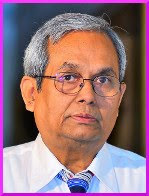
Father Francis Sunil Rosario 

Father Francis Sunil Rosario, a diocesan priest from the Archdiocese of Kolkata, now studying in the USA, made a video presentation of his paper for the February 9-11 National Consultation On Challenges and Crises in Indian Church being held at the Proggaloy Pastoral Centre of Kolkata, India. The title of his paper is "How Far the Laity Impacted the Governance Within the Church and In Their Leadership Role."

Initiated and managed by the Indian Catholic laypersons, this special consultation is dealing with the following topics: The Renewal of the Church According to Vatican II, The Current Political Scenario, The Role of the Media, Crisis Management and Leadership Skills, The Status of Women in the Church, and Youth Aspirations and Expectations.

Please click on the following to watch Father Rosario's video presentation:

https://drive.google.com/file/d/1XVQM1_eF6Tr7RTYt-to0CTPdvXSsGpks/view

To read his above-mentioned video presentation, you may click on the following:

To know more on the consultation at the Proggaloy, you may read the following:

(Updated on Feb. 28, 2019)

Bookmark and Share

Friday, February 1, 2019

The Role Of The Laity In Today's Catholic Church


Image design © Jerome D'Costa (February 2019)

Isaac Gomes, an Associate Editor at the Church Citizens' Voice website of Kerala, India, in this write-up says that the laity (or laypersons who are Catholics but don't belong to the priesthood and Religious Orders) is an indispensable part and parcel of the Catholic Church. Their essential role in the Church has been confirmed by various documents of the Second Vatican Council (1962-1965). 

After this council, until now, the laity is still in the second position, they are still behind in the participation in various designated Church affairs. The members of the Church hierarchy (priests, bishops, cardinals, and pope), who are supposed to be servants (any Pope's official title is 'servus servorum Dei' -- servant of the servants of God) are still dominating them as masters not equal. This writer is, therefore, asking whether the laity needs to wait for another Vatican Council to fulfill the teachings of the Second Vatican Council. Only because of the presence of the laypersons, the hierarchy is able to be there -- no laypersons, no hierarchy. So, why not make the Second Vatican Council teachings a reality?

For more on this subject, you kindly click on the following: 


Initiated by Catholic laypersons, a national consultation, called 'We too are Church,' will be held at the Proggaloy Pastoral Centre of Kolkata, India, on February 9-11. 

This consultation will attempt to implement "the far-reaching teachings" of the Second Vatican Council. Renowned speakers and participants will deal with topics like -- The Renewal of the Church According to Vatican II, The Current Political Scenario, The Role of the Media, Crisis Management and Leadership Skills, The Status of Women in the Church, and Youth Aspirations and Expectations.

To keep in touch with this effort, you may read the following:


Bookmark and Share

Thursday, January 24, 2019

The Conservative-Progressive Conflict in the Catholic Church


Pope Francis seeks the progressive path 
Photo courtesy: biography.com/

U.S. Cardinal Raymond Leo Burke 
seeks the conservative path
Photo courtesy: stltoday.com/

The struggle and conflict were always present from the beginning of the Catholic Church when Jesus Christ himself was a progressive, rejecting quite a number of strict teachings and traditions of the Old Testament and Jewish society and giving a new type of teachings based on love and mercy. He was put on the cross for this very action. Later, we also see conservative-progressive contention among Jesus' own disciples and apostles.

Dealing with this subject, this blogger Jerome D'Costa writes in his article: "Conservatives are also called 'fundamentalists' or 'fanatics.' They want to hold on to the roots or traditional beliefs, rules, and institutions. They cling to the old, they are afraid of the new or fresh ideas.

"Conservatives are usually judgmental -- they judge what is right or what is wrong, and what is sinful or what is not. Religious conservatives or fundamentalists prefer to count sins of others. They complain against any deviating from the religious teachings. They consider themselves above any infraction."

"Progressives, on the other hand, are also called liberals. They challenge old rules and regulations, they try to cope with the changes of the era and try to introduce and accept contemporary changes. They are eager to take sides with social justice and accept the poor and suffering. Since they try to follow the principle of 'love your neighbour,' they place greater importance on mercy, justice, forgiveness, and patience. They want to interpret and explain the Biblical teachings in light of new and changing situations of the world."

In modern times, the Second Vatican Council (1962-1965), called by Pope John XXIII, led the Catholic Church toward a progressive path. He wanted the Church to have fresh air and new ideas instead of the suffocating ones. Later, popes John Paul II and Pope Benedict XVI deviated quite a way from the reforms and updating brought about by the Second Vatican Council. Pope Francis, since his election on March 13, 2013, has been trying to introduce progressive ideas and reforms, but he is facing tremendous push back from the conservative elements in the Church. This struggle, sometimes vicious, is still on. 

To read the article of Jerome D'Costa on this subject, both in English and Bengali, please click on the following:


Bookmark and Share