Showing posts with label Human Rights. Show all posts

Sunday, September 13, 2020

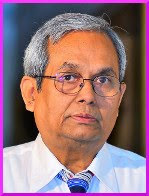
Missionary, Humanitarian, and Human Rights Worker Father Richard W. Timm, CSC, Dies


Father Richard W. Timm, CSC
Photo courtesy via Dhaka Tribune

xxx
Bangladesh minister Mizanur Rahman Chowdhury
(left)givingAbu Sayeed Chowdhury Award
 for human rights to Father Richard W. Timm, CSC

Photo courtesy: the dailystar.net/


Father Richard William Timm, CSC (1923 - 2020), an American missionary priest, educator, humanitarian, and human rights worker in Bangladesh died of old-age complications in South Bend, Indiana, USA, on September 11. He was 97 years old. He worked in Bangladesh for 65 years. 

First, he came to Bangladesh in 1952 as a professor at St. Gregory's College (the precursor of Notre Dame College) and did further study and research on nematodes. He discovered a few unknown types of nematodes, one of which was named 'Timmia parva' (small Timmian worm) after him. 

Later he was the principal of Notre Dame College, served 1970-cyclone affected people in Monpura Island in the Bay of Bengal through a voluntary organization called 'HELP.' He also served the 1971 liberation war-affected people as the Planning Officer of the Christian Organization for Relief and Rehabilitation (CORR), which later was renamed Caritas Bangladesh. 

He founded and became Secretary of the Episcopal Commission for Justice and Peace in Bangladesh. Through this Commission, he worked relentlessly for the human rights of ordinary people in Bangladesh. 

Father Timm was also the author of several books. Among the books are -- a textbook on college biology (this book's name is not known to us now),  The Plant-Parasitic Nematodes of Thailand and The Philippines (SEATO: 1965), The Church and Development in Bangladesh (Dhaka: Caritas Bangladesh, 1994), On Building A Just Society (Dhaka: Caritas Bangladesh, 1994), Forty Years in Bangladesh: Memoirs of Father Timm (Dhaka: Caritas Bangladesh, 1995), History of Holy Cross Priests in Bangladesh Since Independence: 1971 - 2000 (Dhaka: Provincial, Holy Cross Fathers, 2000), and 150 Years of Holy Cross in East Bengal Mission (Dhaka: Congregation of Holy Cross, 2003). 

After being the only nematologist in Bangladesh, he, in the 1950s and 1960s, wrote over 70 scientific papers. 

He was the recipient of a number of honours and awards. Among these are The Abu Sayeed Chowdhury Award for human rights in Bangladesh, the Pro Ecclesia et Pontifice (For the Church and the Pope) award from Pope Paul VI (1978) for his service to the 1971 war-affected people of Bangladesh, the Ramon Magsaysay Award (1987), a medal from the Pontifical Council for Justice and Peace of the Vatican in recognition of his contribution to education, charity, justice, and peace in Bangladesh (2009), and honorary citizenship of Bangladesh from the government.

To know more on Father Richard W. Timm, CSC, please read the following:


Bookmark and Share

Monday, October 8, 2018

Reactions of Members of the Catholic Laity and Clergy to Present Sexual Abuse Crisis


Reactions on the Recent
Clergy Sexual Abuse Crisis Worldwide

The clergy sexual abuse cases that came to the limelight recently in a series of storms -- one more dreadful, shocking, and shameful than the next one. Some Catholics in the U.S. said, "How could this happen again?" Another person said, "Your faith is shaken." 

"I'm horrified," Ellen Ahmad told CNN of the Pennsylvania grand jury report. "It's so sad. As a Catholic, I'm ashamed."

In the U.S., some Catholic lay groups are demanding more responsibility to investigate clergy sexual abuse as the hierarchy has shamefully failed to address the crisis. 

Some big donors of the Catholic Church in the U.S. stopped their regular quota of donations. Some other wealthy Catholics decided to compile their "Red Hat Reports" on red-hatted American cardinals until the next papal conclave (election of the pope). In these reports, they will track which cardinals took appropriate measures on sex abuses and how many others failed to do so and why.

Some laypersons even started to sue the Vatican and certain U.S. dioceses on the issue of clergy sexual abuse.

For more on reactions, please read the following:


(Updated on Oct. 15, 2018)


Bookmark and Share

Saturday, August 12, 2017

Stolen Babies of Spain


Spanish Catholic Church Colluded With Conservative Politicians In This Sinful Act

This 1971 photo shows Catholic nuns with a lady who purchased a baby in a Malaga hospital, Spain 
Photo courtesy: BBC

A BBC documentary, called This World: Spain’s Stolen Babies and aired in October of 2011, shows that a secret network of Catholic doctors, nurses, priests, and nuns were complicit with the right-wing Catholic fascist dictator General Franco of Spain (1939 – 1975) in stealing new-born babies and then trafficking them in the name of good and holy cause. Even after the death of the dictator in 1975, this illegal, unjust, and unchristian act continued up to the early 1990's.

General Franco was a rabid right-winger who ruled authoritatively, without giving any legitimate right to the citizens of Spain, and he considered his opponents, especially leftists and communists, as enemies of the state.

To curtail the influence of communism in the country, he pursued a secret policy of stealing babies born to leftist and communist parents (who were thought to be a threat to the government and the Catholic Church and religion) and giving them to government-approved “Catholic” parents for adoption at an exorbitant price. Later, babies born to single mothers, irreligious mothers, and poor mothers, too, were taken and sold similarly. In the name of keeping people Catholic, priests and nuns also cooperated in this vicious venture by providing false birth certificates to these stolen babies and telling birth-mothers that their babies died immediately after birth. The Spanish Church thought that it got a contract from God to keep the country Catholic by any means – lawful or unlawful. It was also a financially profitable business for the Spanish government and the Catholic Church. 

Where was God in all this? Why does God flee away when members of the Catholic hierarchy commit mortal sins and give scandals, but comes on the mortal-sinning lay persons with all the vengeance? The Catholic priests are supposed to be alter Christus --  another Christ -- according to the teaching of the Catholic Church. In certain countries, some Catholic bishops and priests are after lay Catholic politicians who are pro-abortion and pro-euthanasia as well as lay men and women who are divorced and remarried -- telling them not to receive holy communion in the Mass because these persons are living in mortal sins. But in Spain, at that time, the priests and nuns, who committed mortal sins serially by stealing these babies, kept on receiving holy communion in the Mass. Nobody was there to bar them from saying Mass or receiving holy communion. This is called scandal of the first rate. 

Pope Francis, nowadays is telling us Catholics to abandon this very judgmental, condemning, and greedy attitude and be merciful and self-sacrificing instead.

To know more on this shameful and sinful episode of the Spanish history, you may read the following:

(Updated on August 31, 2017)  
(Updated on April 13, 2018)  

Bookmark and Share

Sunday, September 4, 2016

The Quotation of the Week (September 4 - 10, 2016)


A quotation of Martin Luther King, Jr. on 'state-approved gross injustices,' compiled by Jerome D'Costa

Bookmark and Share

Saturday, August 1, 2015

Bangladesh Indigenous Peoples Demand Government Recognition of Their Rights


Indigenous peoples in Dhaka demanding official recognition of their constitutional rights
Photo courtesy: UCANews

More than 200 people, belonging to different indigenous groups, created a human chain in Dhaka on July 31 and demanded the government recognition of their constitutional rights. 

Braving rains, they also criticized the government for shying away from the annual official  observance of the International Day of the World's Indigenous Peoples on every August 9.

"Indigenous people are routinely abused for their property and land because the state does not recognize them as equal citizens. They are evicted from their land, face violence including murder and rape, but our law and justice system can't protect them," said Sanjeeb Drong, secretary of the Bangladesh Indigenous Peoples Forum, the largest one for ethnic minorities in the country.

Bangladesh, with an area of 147,570 square kilometres (smaller than the Canadian province of Ontario), has a population of about 160 million -- the majority being the Bangali Muslims. About three million people  belong to 45 indigenous or tribal groups.

For more news on this topic, please read the following:


Bookmark and Share

Sunday, August 4, 2013

The Quotation of the Week (August 4 - 10, 2013)


A quotation of Field Marshall the Lord Guthrie of Craigiebank on 'torture,' compiled by Jerome D'Costa
Photo (A metal foot-step at the TTC underground railway station, Toronto: May 23, 2012) © Jerome D'Costa

Bookmark and Share

Sunday, October 23, 2011

Muammar Gaddafi Dies Ignominiously


Colonel Gaddafi in March of this year ignored 
the demonstrations and protests against him by claiming 
in an interview with a foreign journalist that "My people love me!"

Cartoon (Toronto: March 5, 2011) © Joachim Romeo D'Costa


Libya’s Colonel Muammar Gaddafi’s 42-year tyrannical rule came to end on October 20 with his ignominious death at the hands of his own people who had revolted against him. 
His hometown of Sirte in northwest Libya was a place of bitter fights between the advancing rebels and Gaddafi’s armed force personnel and supporters. As he saw the fall of Sirte imminent, he and a few of his close associates were fleeing the city in early morning in a convoy of vehicles. The NATO forces intercepted the convoy and realized that some important person or persons must have been there. American drone missile strikes destroyed a number of vehicles but Gaddafi luckily survived. He and some others left the remaining vehicles and took shelter in a nearby concrete culvert. In the meantime, the rebels nearby closed in and captured bloodied Colonel Gaddafi. 
He was captured alive and was mishandled by the captors, who were mostly ragtag rebels with no or little army training. At one point someone shot Gaddafi dead instead of handing him over to the new government of Libya for trial. 

This Type of Death of Gaddafi Is Uncalled For

Colonel Gaddafi, although a maniacal and brutal head of the state of Libya, did not deserve such a death when he was captured alive and when there were none of his men defending him by using arms. It would be a wise thing to hand him over to the new government authority for trial that would be good for the future of Libya. He should have been held accountable for the atrocious misdeeds he committed against his own people. His immediate killing deprived Libya of bringing justice to him. 

At the same time, we also need to realize that many of the Libyans were living a life of fear and sudden unjust imprisonment and death for so long under the high-handed rule of Gaddafi.  People were fed up with him, yet they could not say or act anything against him without retribution. Many of the people saw how Gaddafi’s men brutalized, imprisoned and killed their near and dear ones for no or little reason. People were so enraged and full of hatred for him that his killing came naturally when he was captured. May be the idea of sparing his life temporarily was thought of dangerous and that’s why he was done with immediately. 

So, the practice of international law of sparing lives of those captured during war for later trial is difficult to expect under such circumstances. 

Gaddafi the Tyrant

Colonel Muammar Gaddafi was not only an autocratic dictator but also a tyrant. He knew how to use his power and brutality to keep people under subjugation. He was adept at using the evil side of his character to rule Libya. 

He was such an ambitious person that in 1969, at the age of only 27, he took control of the country in a bloodless coup. King Idris of Libya was sent into exile in Egypt. Then he did a lot of experiments in ruling the country and finally he imposed his own system – a mixture of capitalism and communism. 

The tyrannical aspect of his character came to the fore one year after he took over power. A group of young army officers wanted to oust him from power by a coup but failed. He became suspicious of others and became vengeful. He saw any opposition as a sign of ousting him from his position. In the 1970’s decade, he imprisoned and killed many students and their supporters who demanded freedom and human rights. Once he also killed about 1,200 unarmed prisoners for asserting their demands. There are dozens of tribal groups in Libya. He favoured his own nomadic Bedouin tribals and acted against almost all others.
Journalists call him eccentric in a nice way, but in reality his tyrannical and unremorseful behaviour is a clear proof of mental illness. He should have been removed from power a long ago. 

He was against western system of capitalism. He nationalized the Western-dominated oil industry of Libya in 1973. He exported terrorism by funding terrorist groups in Colombia, Northern Ireland, Germany and Palestine. His Libyan agents in 1986 bombed a night club in Berlin and killed two American soldiers and wounded many. His agents also placed bomb in the PanAm (American) airlines in 1988 and killed 270 people, mostly Americans. The Western countries then imposed a heavy sanction again doing business with Libya.
This sanction was too much to bear. Colonel Gaddafi, after suffering much economic loss, ultimately admitted its participation in the bombing plot the PanAm airlines and compensated millions of dollars for the death of the passengers and crew. In the first half of 2000’s, he also disavowed himself from supporting terrorism and producing weapons of mass destruction. After this, the USA and western countries began normal relations with Libya.

The Arab Spring – common people’s demonstrations and rallies – demanding freedom and democracy started in the beginning (Spring) of 2011. It became successful in ousting the president first in Tunisia and later in Egypt. Seeing their success, people in Libya also followed the same tactics but were fiercely opposed by Colonel Gaddafi and his henchmen, who vowed to flow rivers of blood in the country by attacking and killing the demonstrators. The killings gave birth to full-scale revolts in different cities of the country. The NATO countries openly supported the fledgling rebels and air-bombed Gaddafi’s forces and weakened their positions. Gradually the rebels, also aided by military weapons and advisers from the NATO countries, freed most of the country and fought the last battles in Sirte until Colonel Gaddafi’s death.

Securing the Rule of Law and Scattered Arms and Weapons Should Be the First Priority

The new government of liberated Libya must secure the rule of law and all scattered arms and ammunition in the country before any peace and stability are established for exercising democracy. 

The birth of Bangladesh in 1971 and the present birth of new Libya in 2011 have similarity. Bangladesh (former East Pakistan), in 1971, fought the war of independence against West Pakistan (now Pakistan) with the direct assistance of India and indirect support of the Soviet Union. After the country won independence in December of the same year, the new government of Bangladesh failed to secure the law and order situation and retrieve all the arms and ammunition from the freedom fighters. As a result, after some months of independence, a reign of terror started all over the country when one political group began fighting another with the loose arms, some freedom fighters resorting to robberies and blackmail and so and so forth. For more than half a decade this lawlessness persisted before matters began to settle. Similarly, Libya, with the direct intervention of the NATO countries, gained freedom  after a bitter fight with Gaddafi forces. The new Libya should take a lesson from Bangladesh's experience.

Another similarity is: Those who came to power after the independence of Bangladesh, did not have experience of holding political or administrative offices in the country due to domination of the West Pakistanis in political and economic fields. As a result, these new leaders failed miserably in running the country. In the midst of chaos and confusion, there were coups and counter-coups and killing of the President of the country, Sheikh Mujibur Rahman, and his colleagues of his political party. If the new Libya is not careful and does not plan well,  it is very likely to face a lot of difficulties in politics, economy and society.


Bookmark and Share

Sunday, May 29, 2011

The Poem of the Month (May, 2011): A CALL FOR HUMAN RIGHTS


_

Police attack a Tunisian demonstrator on May 6, 2011
Photo courtesy: www.Talent-Tn.net
A Call for Human Rights

These are some Middle Eastern countries,
That gave birth to some ancient civilizations.
Recently common people there
Sought a little more breathing space,
They wanted a little more freedom,
They wanted a little more democracy,
They wanted a little more job opportunities,
They wanted a little more human right.

But, the rich and powerful, the deciders
Of the fate of the majority people,
Wouldn’t like to hear any of these.
They unleashed violence, threw bullets
At the peaceful and unarmed demonstrators.
Result? Deaths, bloodied streets, wounded citizens.
Government retributions, seeking out the leaders of
The social media “instigators and propagandists,”
And arresting of anyone deemed to be a threat
Is the vow of the incumbent rulers.

These demands are coming from their very own –
Their own brothers, their own sisters, their own fellow persons.
But, instead of trying to address the situation,
The easy thing is being done – muting the voices, making the people voiceless.
Like the head-burying ostrich in the sand, these rulers think
The problem and nuisance will go away soon!
Bookmark and Share

Sunday, March 6, 2011

Libya: It Takes Only One Person to Make or Break a Nation

_

Colonel Gaddafi is in denial of the
popular uprising against him

Cartoon (Toronto: March 5, 2011) © Joachim Romeo D'Costa

Colonel Muammar Gaddafi (also written as Qaddafi) has totally misread the wishes of his people. Like old-time rulers he thought that by intimidation and direct attack he would be able to contain the uprising of the people, who by this time, is more informed and educated than before. Like other autocratic dictators, he still feels indispensable for Libya.

A 26-year Colonel Muammar Gaddafi, who had ousted the Libyan King Idris in 1969, was hailed as a hero at the time. Once in power, for the last 42 years, he has been running the state as if it is his baaper shompotti (in Bengali, one’s own father’s property where the inheritor is not accountable to anyone).

Colonel Gaddafi is now breaking his own country going against the wishes of his citizens. The popular demand, that started in mid-February, 2011, was asking him first to release a human rights worker and, when denied, the demand came to oust the autocratic dictator himself and establish democracy within the country.There are varied reasons why the Libyans are fed up with his authoritarian rule.

Young people used the Internet social network sites, especially Facebook and Twitter, to call for a nation-wide demonstration against the regime. Instead, Gaddafi vowed to stick to his power and position and unleashed an unprecedented widespread reign of terror by ordering plane-bombing on demonstrators and shooting anyone on sight in the streets. He also ordered arrests of people from streets, homes, offices and, even from hospitals, and shooting them outright.

The international community condemned his actions and demanded his resignation. Hundreds of thousands of people, mostly migrant workers from all over the world, got stranded within the country desperately trying to get out safe. Some big powers have sent warships near Libya for humanitarian work and, if necessary, for forcing no-fly zones in Libya so that Libya’s airforce may not use planes to bomb its own people.

Colonel Gaddafi, with regular supply of oil money, felt so comfortable and powerful that once he was involved in exporting terrorism in other countries by funding different terrorist groups. After facing trade blockade and other restrictions from the West, he, only a few years ago, renounced terrorism and started to have renewed relation with the western powers.

The Background of Libya

The Berber ethnic groups (the ancient Romans used to call them 'Barbarians') were the original inhabitants of the area now called Libya. In the 7th century B.C., the Phoenicians, from the present-day Lebanon, came and colonized the eastern area of Libya. Their settlement was called Cyrenaica. Then the Greeks came and settled in western area, called Tripolitania, which was later, for some time, under the Carthaginian rule. The Romans made Tripolitania as part of their empire from 46 B.C. to 436 A.D. Cyrenaica went under the Romans in the 1st century B.C. The Arabs conquered it in 642 A.D. In the 16th century, both Cyrenaica and Tripoitania nominally were part of the Turkish Ottoman (Osman) empire.

The remaining history of Libya is also a colourful one. Most of the time, Libya was under some foreign powers.

Colonel Gaddafi in the Eyes of World Cartoonists

Because of his autocratic rule and delusional eccentricities, Colonel Gaddafi was a good fodder for cartoonists around the world. His behaviour in face of the recent events in Libya made the cartoonists gleefully creative! Some of these samples are shown below:


Courtesy: www.politicalcartoons.com/

Courtesy: The Toronto Star

Courtesy: National Post, Toronto

Courtesy: www.cartoonistsatish.blogspot.com/


Courtesy: www.allvoices.com/

Courtesy: www.cartoonmovement.com/


Courtesy: www.guardian.co.uk/

Courtesy: The Globe and Mail, Toronto


Courtesy: The Ottawa Citizen

Courtesy: www.politicalcartoons.com/

Courtesy: www.toonpool.com/

Courtesy: www.politicalcartoons.com/

Courtesy: www.omaha.com/

Courtesy: The Independent, U.K.

Courtesy: www.cartoonmovement.com/


Courtesy: twittermail.com/


Gaddafi in the Eyes of the Arab Cartoonists

Let's see how Arab cartoonists see events in Libya and Colonel Gaddafi.

Here are more of what the Arab Press say about Gaddafi and present Libyan events. Bookmark and Share