 |
| The cover of the book, Ekatturer Juddhoshishu: Obidito Itihash, by Mustafa Chowdhury |
 |
| War children, left with the Missionaries of Charity-run Shishu Bhavan (Children's Home) in Dhaka in late July, 1972 |
All Photos courtesy: Ekatturer Juddhoshishu: Obidito Itihash book
Today is March 25, the 45th anniversary
of the Bangladesh war of independence.
On this day we remember the untold atrocities the then Pakistani ruling elite
unleashed on the freedom-aspiring East Pakistanis (Bangladeshis) in the period
of March 25 to December 16, 1971 and the independence that resulted from it. These
atrocities included cold-blooded shooting, arson on properties, looting, rape
of women, and more. More than 10 million people fled the country to take
shelter as refugees in neighbouring India.
According to the Bangladesh Government figures, more
than 300,000 persons were killed in the then East Pakistan, more than 200,000 girls
and women were raped, and millions of dollars worth of properties looted and
burnt to ashes.
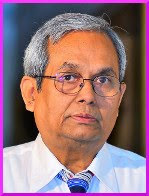
Today, we specially remember the raped women and war babies born thereof. Mustafa Chowdhury, an English-language
professor in Bangladesh and later a Canadian government civil servant in Ottawa,
authored a Bengali-language book Ekatturer Juddhoshishu: Obidito Itihash (1971
War Children: Untold History) last year. For writing this book, the author did
his research for 15 years visiting archives in Canada, Dhaka, Geneva, London,
and New York, interviewing numerous stakeholders in Bangladesh and Canada involved
in the adoption of 15 war babies in Canada , and interacting with the war
babies themselves.

This book provides a short historical background of
the war babies and the role of the Missionaries of Charity and Government
agencies in Bangladesh in their adoption; tradition and existing laws on adoption
in Bangladesh and Canada; hurdles faced both in Bangladesh and Canada about
adoption of these babies; the long journey and logistics involved in the
journey of these babies from Bangladesh to Canada; short life-sketches of the
adoptive parents and their adopted children; how much love and care these babies
received in new families; perspectives and experiences of adoptive parents regarding
these new children; and feelings, attitudes and life-experiences of the adopted
children in Canada. It is interesting to note that a good number of these
adoptive parents had also adopted one or more children from different countries
in addition to having their own biological children.
From this book, we get a glimpse of the 15 Bangladesh
war babies in Canada at the time of writing of it:
- Amina
– this name given at the time of her birth in Bangladesh (Amina Lynn Wolsey –
the new name give to her in Canada after the adoption) – After high school,
Amina studied Bachelor of Education from the University of Western Ontario in Ontario.
She then did her second Bachelor of Education degree from York University in
Toronto. She also completed her M.A. in Education from the University of
Toronto. After staying in Chile, China, and Germany for some timew, she is
teaching at the newly-built International School in Al Khail of Dubai. She
visited Bangladesh twice.
- Arun
(wants to remain anonymous regarding his given new name in Canada) – He was
sent to Mussorie Woodstock International School in the Uttar Pradesh of India,
but did not complete studies. On return to Canada, with several tries, he could
not complete high school studies. He is now working in different trades.
- Bathol
(or Badal) (Ryan Bathol Good) –
After completing South Huron District High School studies, he received honours
degree on Environment and Resources from the University of Waterloo. He visited
Bangladesh three times. Once when he heard his mother was originally from
Barisal, he went there but could not locate her. He is married and has two
children. He owns a bar and a property management company in Kitchener,
Ontario.
- Jarina
or Jorina (Lara Jarina Morris) – She
received honours degree on Tourism Development from Georgian College and
received two prizes for her projects. From Mohawk College of Hamilton, she
studied Ontario Management Development Programmes and Leadership Skills. She is
good at Music. Various newspapers wrote on her achievements. She has been
working at different capacities in different companies.
- Molly
(Shama Jameela Mollie Hartt) – After completing high school studies in
Montreal, she received B.A. degree on English Literature from York University
in Toronto. Then she got B.Ed. degree from Concordia University in Montreal.
She also took courses on teaching English as a second language. Later she
received M.A. degree from Concordia University. She also studied Cultural
Anthropology. Now she is a teacher.
- Omar
(Christopher Omar Boonstra) – He was physically weak but jolly from babyhood.
Although he did not complete high school, he worked in different places. He
loves music. Married in 1999, he is happy with a 14-year old daughter.
- Onil
(Mark Onil Mowling) – He studied Psychology for years at York University. He
also learnt Tai-chi and completed the teacher’s course on it. He worked in
different professions. He is married to a registered nurse.
- Prodip
(Matthew McCullough) – Initially, for some time, his adoptive parents kept
contact with other such parents, but later the contact stopped. At the time the
parents were living in Halifax of Nova Scotia. So growth and development information
on Matthew could not be collected. It is thought that since the parents were
originally from the USA, they must have moved there.
- Rajib (Rajib Cappuccino
Simpson) – During his high school, he was diagnosed with a kind of schizophrenia
(mental illness). A lively boy began to slow down and became dependent on the
family members who spared no pains to help him out.
- Rani
(Rani Joy Morral) – At birth in Dhaka, she was only one pound in weight. She
was growing well in the adoptive family. She was good at music and she loved
writing and helping others. She visited Bangladesh and was particularly moved
when she saw her name in the abandoned children’s register book at the Shishu
Bhavan of the Missionaries of Charity in Dhaka. She used to brood over her
biological mother in Bangladesh. After high school, she went to study nursing
at the Queens University in Kingston. In the second year, she suffered nervous
breakdown due to some mental issues, including anxiety and depression. In spite
of the adoptive parents’ love and care and professional psychiatric help, her
situation worsened. Sadly, at the age of 27, she committed suicide.
- Razina
(Razina
Josee Hogue) – After high school studies, she began to work. Presently, she is
working in the Ministry of Public Safety. On work purpose, she needs to visit
different countries. Twice she visited Bangladesh.
- Rufia Rita (Riza Rufia Rochefort) – She studied
Graphics Design in college and has been working as an advertising professional.
She also worked in Provincial and Federal government offices and also in
different banks.
- Anonymous: After university studies, this person now is in a professional job. At the request of this person, we are not giving any other information on her.
- Shikha
(Shikha Deepa Margaret Cappuccino) – Although, like most Canadians, she did not
complete her high school studies, she began to work. Later from a boyfriend she
got a daughter and, after his death, she married a person, from whom she got
another daughter. The marriage did not last. As a single mother, she has been raising
her daughters well.
- Shomor
(Martin
Ribeiro) – Being underweight (only one kilogram) at birth, he had some mental
issues, like slow learning. Parents tried their best to deal with the problem
with help from professionals. Although he could not complete the high school
studies, he managed to get jobs and lead a married life. In 2013, he suddenly
died of a heart condition.
Comments
of some of these grown-up war babies are both interesting
and illuminating (quotes below are taken from the above-mentioned book):
“As our
[adoptive] parents celebrated humanity, equality for all people was believed,
thought and practiced. With first-hand accounts of inclusion and mainstreaming,
we [adopted war babies] are survivors of a road less traveled. Our trials and
tribulations have made us who we are. We had the visual appearance of
minorities. However, we had been raised in Canadian households as infants.
Assimilated into the Canadian culture, we were a new generation of Canadians
creating new history.” –Amina Lynn Wolsey
“In all these years, I have never really wondered
about my past, my parents or a family I may have left behind in Bangladesh and
I have never made any attempt to try to find them.” –Lara Jarina Morris
“As my understanding of war in general and the
atrocities that occurred began to increase, so did my realization that I was a
result of the Liberation War of Bangladesh. My birthmother was raped by a
Pakistani soldier. This realization did not produce any ill will or discontent.”
–Ryan Badol Good
“Bangladesh, we were both born of blood. We are both
babies of a very tragic but important war. Out of this ferocious bath, you and
I were born.” –Ryan Badal Good
“Knowing what I know about the circumstances of my
conception and the time period, I have never felt the urge to meet or find my ‘putative’
father. I was told that given the war, it is most likely he raped my
birthmother. As for meeting or finding my birthmother, I’ve never felt an
urgency.” –Shama Jameela Mollie Hartt
“My birthmother is neither a woman of disrepute nor
selfish and uncaring. There is no need to punish the birthmother for
relinquishing her child. Every time I think of my birthmother, I thank her for
trying her best. I thank her again for giving me up when she knew that she
could not have offered me what I needed as a child.” –Mark Onil Mowling
“If I were to place an emotional attachment to any
place it would be Canada. My home. For it was here I was accepted and nurtured
and loved. And that’s what makes a home for me.” –Mark Onil Mowling
These war babies, in this book, acknowledged the
unconditional love and care they received in their Canadian adoptive families and
they take Canada as their home.
This book is a milestone in the coverage of the Bangladesh
war baby stories. Those who are interested in the Bangladesh liberation war, it
is a must read for them.
The book has been published by Academic Press and Publishers Library (APPL) in Dhaka and is available from them. It can also be purchased from the author: Call Mustafa Chowdhury -- 613-830-2566 (residence), 613-799-0503 (Cell) or E-mail: mustafa.chowdhury49@gmail.com
(Updated on March 28, 2016)




.jpg)