Showing posts with label Rangamatia Village - Gazipur District of Bangladesh. Show all posts

Sunday, July 26, 2020

Jerome D'Costa -- His Life and Work


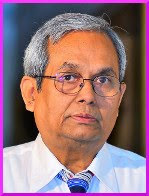
Jerome D'Costa

Originally, Jerome D'Costa is from Bangladesh and now he is settled in Canada. He has retired from his work. He was a journalist, editor, writer, NGO worker, blogger, and photographer. 

He studied Journalism at the University of Dhaka, Bangladesh (1972), and Communications Arts at the University of Portland, Oregon, USA (1977). 

He was the editor of the 'Pratibeshi,' the national Catholic weekly in Bangladesh, and former Associate Director of World Vision of Bangladesh, Dhaka.  

Please have a glimpse of his life and work in the following write-ups:   


1. Profile of Jerome D'Costa: 
2. Parents of Jerome D'Costa: 
4. Website of Jerome D'Costa:
5. Instagram on Jerome D'Costa:
6. Pinterest on Jerome D'Costa: 
7. Twitter on Bangladesh Canada and Beyond (Jerome's blog):
8. Facebook on Bangladesh Canada and Beyond:
9. Books Authored/Translated/Compiled by Jerome D'Costa: 
10. Photos by Jerome D'Costa: 
11. Photo Essays by Jerome D'Costa: 
12. Artworks by Jerome D'Costa: 
13. Doodles by Jerome D'Costa: 
14. Selected Articles by Jerome D'Costa: 
 15. Selected Columns by Jerome D'Costa: 


Bookmark and Share

Tuesday, January 15, 2019

'Rangar Maar Tia' -- A Bengali-Language Book


Rangar Maar Tia (The parrot of the mother of Ranga) --
a Bengali-language book by David Swapan Rozario
Written by David Swapan Rozario and published by the Pratibeshi Prakashani of Dhaka in July 2018, it is his second book with 167 pages covering 29 topics. 

Written in his usual 'village storyteller's style,' it is attractive to its readers. In these "stories," he provides his personal witness to incidences and events in his village of Rangamatia (in the district of Gazipur of Bangladesh), his Biman Bangladesh offices in Dhaka and abroad, personal encounters with certain persons, celebration of some feasts and festivals, and his visits to places of interest in India. Finally, he also mentions some historical tidbits on the formation of the Bhawal Christian Jubo Samity and his role in it. 

If interested, you may also read about David Swapan Rozario's first book, Angshik Holeo Shotto (It's true, though partially) by clicking here.


Bookmark and Share

Sunday, August 30, 2015

The Quotation of the Week (August 30 - September 5, 2015)


A quotation of Scott Adams on 'creativity and art,' compiled by Jerome D'Costa
Photo (A cotton print sari being dried in the sun at Rangamatia Village of Gazipur District, Bangladesh: January 11, 2012) © Jerome D'Costa

Bookmark and Share

Tuesday, August 4, 2015

'Angshik Holeo Shotto' Is A Book of Reminiscence


The cover of the book, Angshik Holeo Shotto

David Swapan Rozario's book, Angshik Holeo Shotto (It's true, though partially), is a 228-page Bengali-language book, published in January this year. This book reminisces his childhood and adolescent experiences at Rangamatia Village of Gazipur

District, Bangladesh; his work life at the Bangladesh Biman Airlines offices in Dhaka and certain other countries; some observations on Catholic religious teachings, Christmas season, and some personalities; and his and his wife's travels to different cities of India, Thailand, Singapore, Italy, Canada, and the USA.

The 37 topics, written in the popular style, make interesting reading. 

The book was published from Hartford, Connecticut, USA.

Bookmark and Share

Sunday, July 21, 2013

The Quotation of the Week (July 21-27, 2013)


A quotation of Frank A. Clark on 'success,' compiled by Jerome D'Costa
Photo (A bamboo grove adjacent to a house at Rangamatia Village of Gazipur District, Bangladesh: January 11, 2012) © Jerome D'Costa

Bookmark and Share

Tuesday, May 21, 2013

Flirting Wth the Past: Remembering Dr. Peter D'Costa, B.H., and Mrs. Agnes D'Costa Today


Dr. Peter D'Costa and Mrs. Agnes D'Costa on their wedding day of May 21, 1938 on the lawn of  St. John the Baptist Church at Tumilia in greater Dhaka District of British India
Today is the 75th anniversary of my late parents’ wedding anniversary. On this occasion, I remember them anew with profound filial love and fondness. They were married at St. John the Baptist Catholic Church at Tumilia of the then greater Dhaka District, presently Gazipur District of Bangladesh, on May 21, 1938. An interesting feature on the wedding of my parents, named “Peter and Agnes,” was written by Sister M. Francelia, CSC, and published in the ‘Bengalese,’ a monthly mission magazine of the Congregation of Holy Cross in the USA, in March, 1939.

My parents were Dr. Peter D’Costa, B.H. (1904-1971) and Mrs. Agnes D’Costa (1915-1995).  He was born at Rangamatia Village of Dhaka District (Gazipur District) in 1904. Initially, he was a homeopathic doctor and then a teacher (1951-1968) at St. Gregory’s High School in Dhaka. He was killed on November 26, 1971 along with 13 others in the village of Rangamatia. 

Mrs. Agnes D’Costa was born at Doripara Village, under Tumilia Catholic Church, in 1915. She was a primary school teacher for 40 years, first at Tumilia Catholic Girls’ School and later at Rangamatia Catholic Primary School. She was one of the founding members of the local Christian Cooperative Credit Union, founder of a women’s multipurpose cooperative society, and founder-teacher of one pre-primary school at Rangamatia. She died of heart attack in Dhaka on May 6, 1992.


Dr.Peter and Mrs. Agnes at a lakefront on their honeymoon at Baleswar (Balasore) in Orissa, British India (1938)
The newly-weds at the same lakefront at Baleswar, Orissa (1938)
Dr. Peter D'Costa in Calcutta (1930s)
Dr. Peter in Dhaka (late 1950s)
Dr. Peter in Dhaka (late 1960s)
Dr. Peter excelled in his studies at the Dunham College of Homeopathy  in Calcutta in the second half of 1920s (during the British period)

Dr. Peter D'Costa, when spending his retirement years at Rangamatia Village, was one of the 14 villagers brutally killed by West Pakistani army men on Nov. 26, 1971
St. Gregory's High School Students gather in their school compound in Dhaka every year to pay tribute to their three former teachers -- D. N. Paul Chowdhury, N. C. Sutradhar, and Dr. Peter D'Costa -- killed by West Pakistani military in 1971
Mrs. Agnes D'Costa, wife of Dr. Peter D'Costa, with their son Jerome D'Costa (1947)
Mrs. Agnes D'Costa with her son Jerome D'Costa (at Rangamatia Catholic Church compound in 1956)
Mrs. Agnes D'Costa with her class students under mango trees at Rangamatia Catholic Church compound in 1973)
Mrs. Agnes D'Costa in Dhaka in February, 1992

Bookmark and Share

Sunday, November 18, 2012

The Quotation of the Week (November 18 - 24, 2012)


A quotation of Abraham Lincoln on 'labor,' compiled by Jerome D'Costa
A farmer is carrying his load at Rangamatia Village in Gazipur District, Bangladesh
Photo (Janurary 11, 2011) © Jerome D'Costa

Bookmark and Share

Saturday, September 11, 2010

A Painting: 'A Farmer and His Son' in Bangladesh


A painting of a farmer and his son bringing harvested boro rice
to their home at Rangamatia Village, Gazipur District, Bangladesh


Painting (April 27, 1968) © Jerome D'Costa

Bookmark and Share

Thursday, August 5, 2010

My Doodles on a Mongoose and a Snake


_
During my childhood in Rangamatia Village in Gazipur District, Bangladesh, I used to see a mongoose come to our family bamboo grove adjacent to our homestead at certain time of the year. I was told that the mongoose was in search of snake eggs which are a delicacy for it. There were different types of snakes, most of them non-poisonous, in our neighborhood.

One day, I witnessed a fight between the mongoose and a snake. I was so frightened by it that I ran away from the war zone. I do not know the result of the fight, but that scene was indelibly marked in my mind.

Later in life, the mongoose and snake, unconsciously, became part of my doodles. You may view them below.


A doodle on a mongoose

Doodle (Dhaka: July 17, 1994) © Jerome D'Costa

A doodle on a snake

Doodle (Dhaka: January 16, 1995) © Jerome D'Costa

Bookmark and Share

Saturday, March 28, 2009

Bangladesh War of Independence: The Enemy Desecrates Churches

Jerome D'Costa's report in the 'The Nation' of February 4, 1972,
describes West Pakistani army attack on the Rangamatia Village,
presently in the District of Gazipur, Bangladesh

(To read the enlarged version of the report,
please click on the above image)


I had written the above report in early 1972 narrating the attack of the West Pakistani soldiers in late November of 1971 on our Rangamatia Village in the then Dhaka District (now Gazipur District). Fourteen persons, including my father Dr. Peter D'Costa, B.H., were killed on that day and about 90% of the houses of the village were set on fire and burnt down by the enemy.

Later they also returned and entered the Rangamatia Catholic church compound and desecrated and looted the Sacred Heart Church and pillaged the adjoining parish priest's house and the nuns' convent after breaking their locks.

During the deadly crackdown of March 25, 1971 night, the West Pakistani forces also fired indiscriminately in old Dhaka hitting St. Thomas Anglican Church's belfry with a cannon shell. The shell and bullet marks on the front wall were visible for sometime after that infamous day.

West Pakistani soldiers also had forcibly occupied a Protestant church at Akhaura in Brahmanbaria District and turned it into a war prison where captured Bangalis were tortured. Indian photojournalist Robin Sengupta, who covered the war between India and East Pakistan in December 1971, gave a photo of that church in his April 2000 book (page 57) in Bengali Chitra-Shangbadiker Cameraye Muktijuddha (The Liberation War Through the Lens of a Photojournalist).

The Original Report on Attack on Rangamatia Village

I am also reproducing below in red colour the report that had appeared in The Nation, the first English daily from the free soil of Bangladesh, dated February 4, 1972 (I took the liberty to add some commas, add meanings or explanations in the first bracket for easy understanding of present-day readers, and break a few longer paragraphs into shorter ones):


They Even Desecrated The Church

By Jerome D'Costa


It was black Friday, November 26, 1971. On that fateful day, the blood-thirsty army men of General Yahya had let loose a reign of terror in the village of Rangamatia, three miles north-west of Kaliganj in the district of Dacca [now written as 'Dhaka'].

The killers of the Bengalees [Bangalis] reached Doripara, which was between Arikhola and Pubail railway stations, where earlier the railway line was destroyed by the Mukti Bahini [freedom fighters] in cooperation with the villagers, and began to barrage the village of Rangamatia with rifle and submachine gunshots in order to make further advance.

When the army men began to wade the beel [marsh] through knee-deep water, a few Mukti Bahini boys, who were guarding the village, fired at them and wounded three invaders. As the fighting young men were outnumbered by the invaders, they could not defend the village as was expected earlier. The hordes of Yahya entered the village with all the fury and set fire to the whole Christian village and machine-gunned fourteen villagers of all ages.

Rev. Father Houser, C.S.C., an American priest residing in the Mission, along with the Sisters from the convent had to take refuge in a paddy field in order to save themselves from the gruesome barbarity of the Pak forces.

Later the aggressors pitched a camp near the damaged railway bridge [half-a-mile away]. When the priest used to go to visit his people in the far-flung villages, where they had fled earlier, the army men would come to the church compound and loot the valuables. They broke open the priest's house and took away everything worthwhile and made a mess of the church records and files. For safety's sake earlier, many Christians had kept their valuables in the priest's house. All of them had been stolen.

They forcibly opened the church door and broke the tabernacle on the altar, which is considered most holy by the Christians, and took away all the holy articles used in the religious ceremonies. One large statue of Christ, which was kept above the altar, was thrown down from there and broken into pieces. They also looted the nuns' convent.


This way, the homiciders gave vent to their anger which was caused by the heroic Mukti Bahini, when a few days ago, they had killed 30 Pakistani soldiers and gained control of and flew Bangladesh flag on Kaliganj. The army tried in various ways to recapture this vital place but failed. They even used a tank to crush our valiant young men but could not succeed. As a last resort, they air-raided Kaliganj, heinously attacked Rangamatia and regained control of the area after much effort.
The brave and ever hopeful people, who lost their houses and some members of their families, did not despair at all. Their willpower had hardened like steel and they were ready to make any sacrifice for the independence of Bangladesh which came into reality a few days later [on December 16, 1971].


(Updated on February 25, 2019)


Bookmark and Share