![]() |
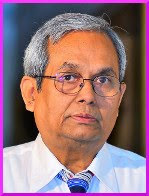
| Pakistani school student Malala Yusufzai, who was shot in the head by Talibans for her vocal support for girls' education |
Wednesday, October 24, 2012
School Student Malala Yusufzai Proposed for 2013 Nobel Peace Prize
Friday, May 6, 2011
Why Osama bin Laden Got a Safe Haven in Pakistan
Osama bin Laden killedin the U.S. 'Operation Geronimo' in Pakistan
Cartoon (Toronto: May 5, 2011) © Joachim Romeo D'Costa
“You can fool some of the people all the time, and all the people some of the time, but you cannot fool all of the people all of the time.” –U.S. President Abraham Lincoln (1809-1865)
Pakistan high government officials, including Presidents, and intelligence heads have been denying for the last six years or so that they know the whereabouts of the most sought-after terrorist Osama bin Laden and his closest associates. The world was fooled so far, but no longer. The killing of bin Laden in a safe house in the heart of Abbotabad garrison (military) town proved it otherwise.
Americans, in general, are very gullible people. Since they depend on reasoning and proof, they usually see things in black and white only. They fail to see things in the grey area in between the black and white. Many of the high government officials and members of the Congress, after the assassination of Osama bin Laden, were wondering aloud why Pakistan, by vowing to fight terrorism with the USA, was not totally loyal and truthful to the USA when billions of dollars worth of aid and other help have been poured into that country. The Americans took it for granted that the pouring of their money and material would buy the hundred per cent loyalty and allegiance of Pakistan. It didn’t happen. Why? Because of the grey areas.
What Are the Grey Areas?
- Deep in its heart, Pakistan considers Osama bin Laden a comrade and co-fighter during Soviet occupation of Afghanistan: Pakistan army officers and intelligent agents worked shoulder to shoulder with Talibans (Muslim fundamentalist group) of Pakistan and Afghanistan and other Afghan insurgent groups, including bin Laden’s foreign Muslim group, during the war with the Soviet Union in Afghanistan (1979-1988). Since the USA strongly believed in the “domino theory” regarding the spread of communism (that if one country becomes communist, the neighbouring countries will automatically fall to the influence of communism), it was one of the biggest donors and cooperators of Pakistan in funding and supplying funds and war material to these groups. The intention was to drive away the Soviets from Afghanistan so that pro-western neighbouring countries like Pakistan and others might not fall to communism and Soviet influence. During this time, Pakistani army officers and intelligent agents became very friendly and built up a close bond with the leaders of these insurgent groups. As a result, Pakistan had a divided loyalty and allegiance – partly to the USA, partly to these groups -- including Osama bin Laden’s group, and partly to the national interest of Pakistan. Even if the USA demanded full cooperation, Pakistan could not provide it due to these dynamics in the region. Pakistan knows it well that if it antagonizes the Talibans and Osama bin Laden and his al-Qaeda group, it will face total chaos when the USA and its allies leave Afghanistan.
- Local tribal mentality and culture are favourable to Osama bin Laden: To understand the mind of the people of Pakistan and Afghanistan, one needs to understand the local tribal mentality, belief, culture, practice and tradition. Most of these people belong to one ethnic or tribal group or another. Their loyalty and allegiance to their own group is very important. What tribal chiefs say or do, other members have to follow the same. Betrayal is punished severely. The tribal culture demands that anybody or any group accepted as friend or guest must be treated well and, if necessary, must be protected from enemies at the cost of one’s life. Since Osama bin Laden was the guest of the Afghan Talibans when they were in power (1996-2001) in Afghanistan, the Talibans cannot just reject him or Pakistan, which is also friend and facilitator of the Talibans – both in Pakistan and Afghanistan – cannot just dump or throw its friend and guest bin Laden to the hounds.
- Many Muslims consider him a holy man and a hero: As Christians feel a kind of admiration and reverence when they hear the words ‘Jesus Christ,’ ‘Virgin Mary,’ ‘Jerusalem,’ ‘Bethlehem,’ ‘Nazareth,’ ‘Rome,’ ‘Vatican,’ ‘Pope,’ and ‘church,’ so do the Muslims when hear the words ‘Islam,’ ‘Prophet Muhammad,’ ‘Mecca,’ ‘Medina,’ ‘Saudi Arabia,’ and ‘mosque.’ When they know that Osama bin Laden is from Saudi Arabia (considered the holy land because of Prophet Muhammad’s birth and preaching of his religion and the elaborate hajj pilgrimage system) and he wants to fight the Western powers (“infidels” or unbelievers of Islam) to leave their bases from the holy land of Saudi Arabia, they consider him to be a savior of Islam and Muslims. That’s they consider him a ‘hero’ and not a terrorist. So, howsoever the Western countries try to paint bin Laden as a terrorist, many Muslims (fundamentalists, conservatives and blindly devoted ones) in the world consider him a holy man in jihad (holy war). Moreover, in South Asia (Afghanistan, Pakistan, India and Bangladesh), the whole demeanor of Osama bin Laden, having a tall figure with calm face, soft voice, flowing beard and white turban on his head, gives an impression of a pir (Muslim holy man). As a result, they wouldn’t hesitate to protect him and give him security from U.S. surveillance and capture. This is very much proven by the fact that in spite of $27 million U.S. reward for information and capture of Osama bin Laden, no one among the Talibans and Pakistanis came forward so far to betray his whereabouts and claim the reward.
- In spite of denials, Pakistani armed forces and military intelligence will remain suspects for sheltering Osama bin Laden: Pakistan has one of the most active, efficient, powerful and pervasive military intelligence services in the world. It is said that no foreign ant, fly or mosquito can enter Pakistan without the knowledge of the military. One citizen of Pakistan’s Abbotabad town, where Osama bin Laden’s lair was attacked by the U.S. forces, mentioned in an interview with a foreign TV journalist how strict eyes are kept on persons moving about, or entering and leaving the city. The city security personnel regularly question people, check their ID card and vehicles. He said that there was no way that a foreigner, especially the high-profile personality like Osama bin Laden, could hide in the city without the knowledge of the military. In the early 1990s, a foreign (western) non-government organization (NGO) worker, after his visit to projects in Lahore area of Pakistan, mentioned in Dhaka that wherever he stayed and visited (hotel, NGO offices, village projects and market places), he was stealthily followed by army intelligence agents. All these prove how active Pakistan’s intelligence service is. Moreover, the spacious area with a large building with special security measures, including no telephone or Internet service connections, must have drawn attention of the town officials. Now, everyone is in denial of the knowledge of bin Laden’s presence there.
- It is plausible that the military hid the information of Osama bin Laden’s presence in Pakistan from the elected politicians. From the inception of Pakistan in August, 1947, its military has been running the country from behind elected politicians. Whenever some politicians failed to listen to them, they were brushed aside and the military came to power through coups. From 1947 till 2011, Pakistan experienced military coups in 1958, 1977 and 1999. There were also other unsuccessful coup attempts in the country.
There is nothing surprising or unusual that Osama bin Laden, although considered a deadly terrorist and an enemy by the Western countries, is considered a savior of Islam and a hero by many Muslims of the world. So, giving him a secure shelter from the U.S. or NATO forces is not thought to be a crime, but a duty by devout Muslims.
Monday, May 2, 2011
Osama bin Laden Killed, His Corpse Buried in the Sea
Two dozen American CIA paramilitary and Navy SEAL personnel in a pre-dawn helicopter raid on a mansion at Abbotabad, Pakistan, killed al-Qaeda leader Osama bin Laden in a firefight on May 1, reports CBCNews. The raiders also left Pakistan safe with the corpse of Bin Laden. It marks the end of the 10-year hunt for the world’s top terrorist who had directly ordered the destruction of the twin towers in New York on September 11, 2001.
US President Barack Obama in a TV statement from the White House declared: “I can report to the American people and to the world that the United States has conducted an operation that killed Osama bin Laden, the leader of al-Qaeda and a terrorist who is responsible for the murder of thousands of innocent men, women and children.”
On the background on the US war on terrorism, the President said: “We quickly learned that the 9/11 attacks were carried out by al-Qaeda – an organization headed by Osama bin Laden, which had openly declared war on the United States and was committed to killing innocents in our country and around the globe. And so we went to war against al Qaeda to protect our citizens, our friends, and our allies.”
He also added: “And on nights like this one, we can say to those families who have lost loved ones to al-Qaeda’s terror: Justice has been done.”
The US intelligence, on receiving information on the location of bin Laden, has been monitoring the Abbotabad compound since August, 2010. After being sure of bin Laden’s presence in the compound, the May 1 raid came with approval of President Obama. The raid was completed within 40 minutes and the raiders left Pakistan for Afghanistan.
After confirming the identification of the dead body of bin Laden by DNA and other means, the body was buried in the Arabian Sea after following proper Muslim ritual and practice. His corpse is destined to become a feed for the sea fishes. The main reason for burying him in the sea is not to allow a shrine or a place of pilgrimage be built over his body from where extremist Muslims in future would draw inspiration for committing more terrorism.
Jubilation in the US and Abroad
The US citizens, especially families that lost their loved ones on the 9/11 al-Qaeda attacks by planes, expressed their joy and felt some sort of relief.
Various leaders of the world and the UN Security Council expressed their satisfaction at the achievement of the US.
Newspapers in the US and world, in their May 2 issues, gave a prominent first-page coverage on the death of Osama bin Laden.Sunday, February 27, 2011
How A Canadian Soldier Endeared Himself to Afghans By Speaking Their Language
Master Corporal Shawn Grove, a Canadian soldier in Afghanistan,displays his Pashto dictionary and his self-written notebook
of Pashto words and phrases. He learned to speak fluent Pashto
on his three tours of duty in Afghanistan.
Photo courtesy: Rick MacWilliam of Edmonton Journal
Many a great persons spoke of the importance of learning and speaking a different language from one's own. American businessman Lee Iacocca said: "Talk to people in their own language. If you do it well, they'll say, 'God, he said exactly what I was thinking.' And when they begin to respect you, they'll follow you to the death." Italian film director Federico Fellini said: "A different language is a different vision of life." If one learns a different language, he or she will come to know what that language speaker thinks and why he or she thinks so. A Czech proverb says: "Learn a new language and get a new soul." South African politician and Nobel Peace Prize winner Nelson Mandela said: "If you talk to a man in language he understands, that goes to his head. If you talk to him in his language, that goes to his heart."
On the occasion of the International Mother Language Day this year, we salute Master Corporal Shawn Grove of Alberta for his accomplishment of learning Pashto, a different and difficult language, and being able to communicate with its speakers, who felt closer to him than any non-Pashto speaking Canadian or other nationality soldiers.
We reproduce below Master Corporal Shawn Grove's story previously published in the Edmonton Journal of February 13, 2011:
Alberta soldier who speaks Pashto draws stares in Afghanistan
Speaking the language is a great icebreaker for Master Cpl. Shawn Grove
By Ryan Cormier
EDMONTON — It was a blistering, dusty July day and Master Cpl. Shawn Grove was stuck in a traffic jam on a narrow, crowded road in Kandahar City.
His upper body out the roof of a Light Armored Vehicle, at the gunner position, he turned to an Afghan family in an open-box cargo truck in the next lane. A farmer and his two young sons sat among sacks of grapes and raisins.
“How you guys doing?” Grove asked in Pashto, the dominant language in southern Afghanistan. “Is traffic always like this?”
The farmer’s jaw dropped. His sons scrambled over their grapes to gawk at the foreign soldier who spoke their language. Between the truck and the LAV, an Afghan boy skidded his bike to a clumsy stop and stared at Grove, wide-eyed.
Across the gap, the farm boy from Barrhead shook hands with the Afghans. He passed the boys Jolly Rancher candies mailed from Canada, and was rewarded with a bag of grapes in return. Traffic finally moved, and Grove told them to have a good day, again in Pashto.
Everyone within earshot stared.
That quick conversation leaped the language barrier between Canadian soldiers and those they protect.
Pashto is spoken by more than 50 million people worldwide, and is well-known as a difficult language to learn. For the past nine years, the Canadian Forces have relied heavily on local Afghan translators.
But halfway through his second tour in the country, Grove decided there was a better way.
Partly, it was boredom. Partly, he wanted to crack a joke to Afghan National Army members he saw every day.
“I just decided it would be interesting to hear what they were saying all the time. It started with me writing a couple sentences down and having them slowly translate them. I would write it the way I heard, making up my own punctuation. It rolled from there, it was learning by immersion.”
At nights, the soldier studied in his bunk. He spent his free time with Afghan army members and police officers, drinking chai tea and teaching them English in exchange for new Pashto phrases he carefully printed in a dog-eared notebook.
By the end of his 2008 tour, the member of the Princess Patricia’s Canadian Light Infantry, 1st Battalion, could converse. But it wasn’t until he returned to Edmonton that his studies took off. Grove bought a computer program and sought out local Afghans to talk with. He watched Pashto videos on YouTube and covered the subtitles with his hands. He’d never learned a second language before, no classes in high school, and had no previous interest.
“I didn’t follow any learning pattern, and military-wise there is no language training. They give us an afternoon, here and there, but it’s for the basics, like greetings or ‘Stop or I’ll shoot.’ There was no real program in place, so I did my own thing.”
When he returned to Afghanistan in 2009, Grove was determined to hold full conversations with Afghan people. When Canadians arrived in a new village, approaching nervous families, it was often Grove who smoothed over those first crucial minutes.
“It’s such an icebreaker. If you can walk into a village and say hello, that’s one thing, but it’s another to say it’s nice to meet you and crack a few jokes. You get everybody smiling and you’re on a better foot already. It breaks down a lot of barriers. People are way more receptive and remember you the next time you arrive.”
Grove would show off pictures of his family and aerial shots of the farm where he grew up.
He discovered that a Captain Black cigar from Canada bought him 20 minutes of conversation while the smoke drifted.
Lifelong Afghan soldiers had never met a foreign uniform they could discuss their personal lives with. Even the Afghans who made it obvious that Canadians were unwanted surrendered to their curiosity about Grove.
He didn’t learn to read and write the language, as many of the Afghans he spoke to were illiterate.
Grove, 28, smiles when he recalls the missteps and confusion that accompanied his learning — such as the time a translator tricked him into calling his commanding officer an asshole. He learned the hard way that Afghans have little concept of sarcasm. Often, he was encouraged to convert to Islam, which he politely declined.
Grove once translated between a Canadian medic and an Afghan boy with a gash on his head. When they were done, Grove stood, and in his rough accent, said: “It’s sad when children are hurt. I don’t like to see this.”
The assembled locals put their hands over their hearts in reply.
Over his three tours, Grove has seen his language skills grow in importance as the mission has progressed from firefights with the Taliban to a more structured counter-insurgency.
“In 2006, on my first tour, I didn’t even give it a thought. Now, a counter-insurgency is basically a popularity contest, you want to be more popular than the adversary. You’re a lot more popular if you can tell a joke.”
Capt. Cole Peterson, also from 1PPCLI, met Grove before and during their 2009 tours of the country. He applauded Grove’s efforts, both for the dedication they require and the benefits they bring.
“Over there, it’s completely obvious how foreign we are. We look different, walking around in all our gear. For one of us to speak like them, it immediately gets us in the door.”
Most soldiers “bash a few phrases” into their heads to make their jobs easier, but few have the natural aptitude for the language Grove has, Peterson said.
“It is a completely different language than anything we’re used to. There’s a lot of distinct noises you have to make with your throat.”
Grove plans to leave the military soon for a more “normal life,” having experienced everything he imagined when he joined at age 19 in 2002. The military was his dream since childhood and it led to 20 months in Afghanistan. Now, his battered, torn Pashto-English dictionary is the prize souvenir of his three tours.
“In hindsight, it’s a simple thing,” he said. “It’s a sign of respect to learn someone else’s language.”
Wednesday, December 22, 2010
Afghanistan War: To Be or Not To Be, That's the Question -- 3
US soldiers fighting in Mian Poshteh, AfghanistanPhoto courtesy: www.gawker.com/
Dozens of ethnic groups (tribals) live in Afghanistan with their own language and cultural diversities. Among these groups, some important ones are: Aimaqs (in the north-west and west of the country), Baluchis (in the south), Hazaras (in the middle of the country), Kirghizes (in the north), Kizilbashes or Qizilbashes (mainly in urban centres), Nuristanis (in the north-east), Pashtuns (in the east, south-east, and north-west), Tajiks (in the north-east, east, and south-west), Turkmens (in the north) and Uzbeks (in the north). To keep these ethnic groups together is a difficult task, too. Tribal chiefs and warlords have their own agenda and fealties.
To Be or Not To Be
Initially, the Afghanistan War was a necessity. It was a purposeful war, aiming at capturing the honchos of the terrorist organizations and root them out from Afghanistan. After the US invasion of Iraq in 1983, the purpose began to fade and its importance receded to the back burner. Now, in spite of fielding more troops, money and material, it is turning into a purposeless war because those honchos can be found nowhere and their suspected dens can't be attacked directly.
As we sit here, there are people dying or getting maimed for life on both sides of this war.
Canadian Prime Minister Stephen Harper announced that Canada would withdraw the bulk of its military forces from Afghanistan in 2011, but it will keep about 950 soldiers there until 2014 as advisers and trainers in non-combat roles. They will train the Afghan forces so that they can function on their own.
The US and other NATO forces are supposed to leave Afghanistan in 2014.
A recent ABC News/Washington Post Poll shows that six in ten Americans say that Afghanistan War "is not worth fighting." The Angus Reid Poll of August 4-5, 2010 shows that 53% of the Canadians oppose Canada's participation in Afghanistan war.
There have been public protests against Afghanistan War in different parts of the world. Recently, there was a protest in London and another Washington, D.C., followed by arrests of many protesters.
The psychological cost of the war in Afghanistan is immense. The psychological effect on many of the soldiers last for years and, for some, for the rest of their life. The tax payers are the ones who would be bearing their treatment costs.
Many people in different NATO countries are asking whether it is worthwhile to continue the war in Afghanistan when the main purpose of finding and capturing the terrorist leaders has failed miserably, let alone eradicating the roots of terrorism based in that country.
Most importantly, billions of dollars are being spent in this unresolved war. Much of this money is being borrowed by governments involved in the war. Is it not wise to leave this war and concentrate on preventative action on homegrown terrorists and their breeding grounds in NATO and European countries?
It is to be or not to be, that's the question now.
Tuesday, December 21, 2010
Afghanistan War: To Be or Not To Be, That's the Question -- 2
Map of Afghanistan with its neighbouring countriesMap courtesy: http://maps-world.cn/
Past Foreign Invasions in Afghanistan
Although a rugged, mountainous and land-locked country, Afghanistan had a strategic position. It is located in such a way that overland routes crisscross it from Persia (Iran), Indian subcontinent and Central Asia. As a result, it was victim to numerous foreign invasions.
In 667 A.D., Arab armies partially subdued some Afghans but faced many revolts. After several other Arab invasions, Islam took root in this country, where Zoroastrian (Parsi), Buddhist and Hindu faiths were prevalent earlier. In 122o, Mongol emperor's armies were in charge of this land.
In the 19th century, the British, who were ruling the Indian subcontinent, wanted to extend their influence and power in Afghanistan by supporting some tribes against others. Their goal was to secure this place against Russian aggression. The British fought three Afghan wars in 1838-1842, 1878-1880 and May-August 1919. In the first Afghan War, the British lost about 15,000 soldiers to snipers and guerrilla incursions during their retreat from Kabul.
In 1979, the Soviet Union, with the intention of helping the weak pro-Soviet communist government of Afghanistan against the Islamic militant groups, deployed its armed forces there. To end the Soviet influence in that country, USA, Saudi Arabia and Pakistan spent billions of dollars in helping, training and arming anti-communist mujahedeen (fighter in a jihad or holy war) guerrilla groups (see the map below) and succeeded in forcing the Soviets to leave Afghanistan in 1989. Osama bin Laden and his group also fought against the Soviet army alongside the local mujahedeens. This war resulted in more than five million Afghan refugees taking shelter in neighbouring Pakistan.
A map showing major anti-Soviet insurgent groups in AfghanistanMap courtesy: http://maps.world.cn/
After the ouster of the Soviet army, some Afghan mujahedeen groups took over power, but bitter in-fighring weakened them. In this void, the Afghan Talibans and their supporter Osama bin Laden's Al Qaeda became more powerful with backing and assistance from Saudi Arabia and Pakistan. In 1996, the fundamentalist and militant Talibans usurped power and introduced restrictions on education and women working outside their homes, made women's burqa (veil) use compulsory, and prohibited music and lifestyle considered un-Islamic by them.
When Osama bin Laden received an all-out support from the Taliban government, it began to provide training to foreign Muslim youths determined to wage jihad (holy war) on the infidels, mostly Americans, who had placed their armed forces in Saudi Arabia during the Persian Gulf War. Osama bin Laden expressed his vow for driving out foreign forces from Saudi Arabia, considered as "the holy land" of the Muslims.
Monday, December 20, 2010
Afghanistan War: To Be or Not To Be, That's the Question -- 1
The above image shows the stakeholders in the Afghanistan War(you may click on the above image to view an enlarged version of it)
Layout and design (Toronto: Dec. 16, 2010) © Jerome D'Costa
The present war in Afghanistan is running in its ninth year. After the 9/11 terrorist attack on the Twin Towers in New York in 2001, the US with its North Atlantic Treaty Organization (NATO) allies embarked on this war with the goal of eradicating the terrorist roots that took hold in the favourable climate of Afghanistan. The war is still being fought with no end in sight. It is like a bone stuck in the throat -- neither can it be swallowed nor can it be vomited out!
Background of the War
When Iraq, under President Saddam Hussain, attacked Kuwait in 1990 during the Persian Gulf War, the neighbouring Saudi Arabia, apprehending Iraqi attack on it soil, sought immediate succour of the USA. As a result, the US govenment deployed its troops in Saudi Arabia. This is how US troops started to be deployed in that country. During the US-Iraq war in 2003, there were upto 10,000 US troops in Saudi Arabia, considered a country of Islamic holy places by devout Muslims.
This very presence of foreign and "infidel" (not believing in Islam) troops of the USA, gave Al Qaeda chief Bin Laden a cause to oust them from the holy soil of Saudi Arabia. To realize this goal, Bin Laden and his followers began and extended their efforts in many different ways in different countries. Ultimately, on August 7, 1998, simultaneous car-bomb attacks on US embassies in Nairobi, Kenya and Dar-es-Salaam, Tanzania, hundreds of people were killed and several thousand wounded. In retaliation, US missile-bombed Al Qaeda training camps in Afghanistan adjacent to Pakistan border on August 20, 1998.
On September 11, 2001, Al Qaeda-influenced Muslim militants plane-attacked the Twin Towers of New York. The US took it as a war on soil and formed a coalition of allied countries and attacked Afghanistan in October, 2001 and drove out the pro-Al Qaeda Taliban government from power. Some of the top Taliban government leaders along with Osama bin Laden and his senior members are still in hiding.
Presently, armed forces from US, Britain, France, Canada and 38 other countries are involved in fighting the ousted Talibans and their supporters with heavy casualties. As of December 14, 2010, there were a total of 2,193 coalition soldier deaths in Afghanistan -- USA losing 1,361, UK 346 , France 52 and Canada 152 soldiers.
A Difficult War
The Afghanistan War, instead of being a face-to-face army war, turned into a guerrilla war. In a guerrilla war, regular troops face the invisible enemy who mingle with the common people without any battle dress and attack the troops and vanish and take shelter among general population. A guerrilla war cannot be won if the guerrillas get support of general population within the country and regular funding, arms supply and shelter from neighbouring countries. Such is the situation in Afghanistan now. This situation only prolongs the war without any positive outcome. For the regular troops, a guerrilla war is a waste of manpower, money and material.
The USA had faced similar situation in Vietnam War (1965-1975) and abandoned it. The Soviet army faced the same situation in Afghanistan in its ten-year war (1979-1989) there and gave it up, too.
The Stake Holders of the Afghanistan War
There are many stake holders of the Afghanistan War (please see the above image for details). Each stake holder is pulling the war in a different direction because of its different interest in the war. It is difficult to lead a war if one has to appease some stake holders, ingratiate some others, bribe some more and directly fight out others.
Wednesday, July 28, 2010
The Wikileaks Exposure of Secret US Military Documents: A Prime Example of Data Journalism
The www.wikileaks.org homepage where confidential US militarydocuments under the name of "Afghan War Diary 2004-2010"
have been published
The most recent mind-blowing leaks that this website published on July 25, 2010 contains around 92,000 classified (secret) US military documents on the Afghanistan war covering the period of January 2004 to December 2009. These documents give a clear picture of the situation of the Afghan war at the ground-level.
Following the WikiLeaks leaks, as a result of a pre-arrangement, the New York Times, the Guardian of Britain and Der Spiegel, a German magazine, on July 26, published summaries and articles based of the secret documents.
- The Taliban are using portable heat-seeking missiles to attack US and allied aircrafts and helicopters.
- Secret US commando units killed insurgents as well as ordinary citizens while in their missions.
- The ISI, the Pakistani spy agency, is cooperating both with the USA and the Taliban factions.
- Under the veiled unity, there is bitter division among the US and the allies regarding the Afghan war.
The WikiLeaks, a whistle-blowing website, founded by Julian Assange, a one-time Australian computer hacker, has been practising data journalism since July, 2007. It is "a multi-jurisdictional public service designed to protect whistleblowers, journalists and activists who
have sensitive materials to communicate to to the public. It says: "We think better transparency is at the heart of less corruption and better democracies." The WikiLeaks also agrees with the ruling of the US Supreme Court on the Pentagon Papers that "only a free and unrestrained press can effectively expose deception in government." In a recent interview to Britain's Channel 4 TV, Julian Assange said that the WikiLeaks is "the vanguard of a particular ideal -- that justice comes about because of the disclosure of abuse."Saturday, April 18, 2009
The Psychological Cost of the War in Afghanistan
insurgents in the rugged hills of Afghanistan
War, any war, is not a cakewalk. Once late Pope John Paul II had said that in a war no one is a winner. All the parties to a war are losers.
The Toll on the Canadian Forces
The Toronto Star reports that more than one in five Canadian soldiers and police officers engaged in Afghanistan war efforts leave the force with post-traumatic stress disorders (PTSD) or other psychiatric problems. By the end of March, 2009, the personnel discharged on these grounds rose to 1,053, representing an increase of more than 50% from that of 2008.
It has been learnt from documents, released released under the Access to Information Act, that longer, multiple and more dangerous deployments "have led to an increase in the prevalence of operational stress injuries among the members of these organizations.,"
The paper also reports that the federal government has spent millions of dollars on clinics across the country to treat military and police veterans after years of criticism that it was failing those who risk their lives in the country's defence.
Impact of War on the U.S. Soldiers
The Science Daily reports that, according to a new RAND Corporation study, one in five Iraq and Afghanistan veterans in the USA suffers from PTSD or major depression. Nearly 20% of military service members (about 300,000) returning from Iraq and Afghanistan report symptoms of PTSD or major depression and only a little more than half of them have sought any treatment.
The researchers also found that 19% of the returnees report that they experienced a possible traumatic brain injury while deployed, with 7% reporting both a probable brain injury and current PTSD or major depression.
Incidences of Violence Among the Veterans
In Canada, they have found that "untreated cases in the past have resulted in tragic and horrifying cases of drug addiction, assault, rape and even suicide."
In the New York Times report it has been mentioned that there have been 121 cases in which veterans of Iraq and Afghanistan committed killing in the USA, or were charged with one, after their return from war. In many of those cases, combat trauma and the stress of deployment -- along with alcohol abuse, family discord and other attendant problems -- appear to have set the stage for a tragedy that was part destruction, part self-destruction. Half of these killings involved guns, and the rest were stabbings, beatings, strangulations and bathtub drownings. About a third of the victims were spouses, girlfriends, children or other relatives. Although this number is not that remarkable in relations to the total number of returnees, these incidences require our attention to be placed in the total welfare of the soldiers and their families. According to the US Veterans Administration, veterans with PTSD are two-to-three times more likely to commit intimate partner violence than veterans with the disorder.
"50- or 60- or 70-year problem"
The Associated Press in its April 3, 2009 report mentions that US Navy Admiral Mike Mullen, chairman of Joint Chiefs of Staff, said that homelessness, family strains and psychological problems among returning veterans of the Iraq and Afghanistan wars would persist in the US for generations to come. "This is not a 10-year problem. It is a 50- or 60- or 70-year problem," he said. He was speaking to a lunchtime audience at the Hudson Union Society, a group that promotes nonpartisan debate.
The Impact of the Afghan War on Soviet Soldiers
The Soviet Union's invasion of Afghanistan started in December, 1979 and ended in 1988 with the withdrawal of their troops by Mikhail Gorbachev. In thoses years, 15,000 Soviet soldiers were killed and many others were wounded.
The war had a very negative impact on the Soviet soldiers. Many became invalids, many felt unwanted by the State, and many did not get rehabilitated as expected. Women serving in Afghanistan, worked as nurses, office workers, cooks and other support staff. Many of these women got raped by their own soldiers in Afghanistan. On their return, many of these women were looked down upon by the society. They were thought to be prostitutes, cheap women who "amused" their own soldiers.
Forty-six percent of the civilians thought that the Afghan war was a national shame and only 6% said that they were proud of their soldiers who had fulfilled their international duty in Afghanistan.
Among the long-term effectson the Soviet soldiers were: alcohol and drug addiction, physical disability, PTSD with symptoms including "flashbacks, emotional numbness, withdrawal, jumpy hyperalertness or overcompensatory extroversion."
Afghanistan War: A Clueless War -- Get Out of It!
In traditional warfare, you know the enemy -- their identity, their location, their movement. In guerrilla warfare, as in Afghanistan, you do not know the enemy because they blend and mix up with the common folks. This "unknowingness" and "no-clear-frontline" create fear among the regular soldiers. They have to be battle-ready all the time without any sleep or rest. This definitely cause psychological drain on the regular soldiers. Many of them cannot cope with this situation.
Initially, the Afghanistan war was a worthy cause. Gradually it lost its worthiness, as the bulk of the enemy is no longer in Afghanistan. They come from another country that favours their presence and, in most reports we see, that even actively aids the very terrorists that the NATO soldiers are fighting with.
No, No, No, No, No, No, No, Yes, Yes
Is the Afghanistan war worth it? No.
Is it valorous to fight this war? No.
Can our Canadian soldiers feel patriotic in fighting this war? No.
Do our parents of soldiers feel proud of sending and letting their children die in this war? No.
Are we fighting Canada's war? No.
Are we able to search and destroy the enemy in their dens? No.
Are we, with limited and "humane" fighting, able to defeat terrorism? No.
Are we letting our dear soldiers die for nothing? Yes.
Are we there only to save our skins and working as security guards of the Afghan government personnel and infrastructures, instead of really fighting the enemy? Yes.
Canada needs to take a quick and serious decision on its war in Afghanistan. We can no longer hide our head in the sand like the ostrich bird. We can no longer be the "see-nothing, say-nothing and hear-nothing monkey!"


.jpg)