Showing posts with label Islam. Show all posts

Thursday, March 31, 2016

High Court Verdict: Islam As State Religion in Bangladesh Will Stay


Bangladesh Supreme Court building, where the High Court is housed, in Dhaka
Photo courtesy: AFP


Bangladesh High Court on March 28, 2016, rejected a writ petition that was submitted for removing Islam as the state religion in the 90%-Muslim-majority country. It means that Islam as the state religion of Bangladesh will continue.


A 15-member secularist activist group – having lawyers, university professors, writers and journalists – had filed the petition in 1988 challenging the status of Islam as the state religion in the country, which in December of 1971 had emerged as an independent but secular country from Islam-oriented Pakistan. They argued that the state religion conflicted with the Bangladesh’s secular character and discriminated against religious minorities. 


Only in June, 2011 did the court take up the case when the petitioners filled a supplementary plea challenging the status. The court then asked the government why the special status of Islam should not be scrapped. But the decision was further adjourned and the verdict was given on March 28 this year. In the same year of 2011, Sheikh Hasina’s government amended the country’s constitution and added “secularism” in it but retained Islam as the state religion. 


It is to be noted that military ruler President Ziaur Rahman came to power in the mid-1970s. To appease Muslim countries like Pakistan, Saudi Arabia, Libya and some others, he allowed important leaders of the banned Jamaat-i-Islam party  to return to the country from Pakistan and participate in politics. In 1977, with an amendment, he erased secularism from the country’s constitution. Another military ruler and President, Hussain Muhammad Ershad, made Islam as the state religion bringing a constitutional amendment.

In 1988, when the Ershad government was preparing to make Islam as the state religion, religious minorities, including Christians, were apprehensive of the outcomes and repercussions on them because of their second-class status after enjoying equal status with the Muslims since the 1971 independence. 


At the latest verdict of March 28, the religious minorities feel let down in the face of increasing deadly attacks on them (Protestant pastor Rev. Luke Sarker in Pabna District, Italian Catholic priestFather Piero Parolari in Dinajpur Town, and Hindu priest Jogeswar Roy in Panchagarh District) in the recent past. 


‘Secularism’ (which means religious freedom for all religions and no state interference in any one) and ‘Islam as the state religion’ (which means the direct intervention of the state regarding Islam) are two opposites that dilute the consistency in the Constitution of Bangladesh.


To learn more on the writ-petition and background information on the state religion, please read the following:

 (To be updated)

Bookmark and Share

Tuesday, August 11, 2015

Nunavut Gets Its First Mosque


A mosque under construction in  Iqaluit, Nunavut's capital city
 Photo courtesy: Toronto Star

Map of Nunavut, a Canadian territory
Map courtesy: www.geology.com/

Nunavut's first mosque in its capital city of Iqaluit, spearheaded by Syed Asif Ali, a Muslim immigrant engineer from Pakistan, is proceeding to its completion, reports the Toronto Star.
It will be the first mosque in the entire territory of Nunavut which has a Muslim population of about 100. These immigrant Muslims, coming from different countries, migrated to Iqluit from various Canadian provinces for job purposes. In the meantime, some of these Muslims married local women and a number of local people also embraced Islam as their religion. 

As the church is an integral part of any Christian community, so is the mosque for the Muslims. This need for a place of worship is being realized today through donations from Muslims as well as non-Muslims. 

Nunavut is a Canadian 'territory' -- not a province -- with an area of 2,093,190 sq. kilometres, and, according tot he 2011 census, its population is 31,906 -- of whom, 83.6% is Inuit ('Eskimo'), 14.96% non-aboriginals, 0.44% Metis, and 0.34% the First Nations people.

In each July, the average temperature in Nunavut varies from 4 to 11 degree Celsius, and in January it goes down to -21 to -33 degree Celsius.

For more on the mosque and the Muslims in Iqaluit, please read the following:


Bookmark and Share

Sunday, October 6, 2013

“Jamaat does not have any right to do politics in Bangladesh,” Says the Son of Jamaat-e-Islami Party’s Founder


Syed Haider Farooq Maudoodi, son of Syed Abul A'la Maudoodi, founder of Jamaat-e-Islami Party

 Photo courtesy: DhakaTribune

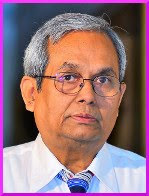
Syed Haider Farooq Maudoodi (69) is the son of Syed Abul A’la Maudoodi (1903 - 1979), the founder of the Jamaat-e-Islami Party . He is a columnist in Lahore, Pakistan, and a former airlines pilot. On October 6, the DhakaTribune published his interview that deals with Jamaat-e-Islami Party’s politics, state religion, Islam and politics, war crimes and War Crimes Tribunal in Dhaka and so on. 


To a question, Syed Haider Maudoodi replied, “Jamaat does not have any right to do politics in Bangladesh, particularly when they opposed the birth of it [Bangladesh]. They neither have the right, nor should they be allowed to do politics here…I think it is your leaders’ fault. Your leaders allowed them to do politics in this country after the independence. If you allow them, accept the fact that their politics is based on religion.”

He further added, “The question is who is behind this situation in Bangladesh? See, the constitution Sheikh Saheeb (Sheikh Mujibur Rahman) left is no more in the country [Bangladesh]. How did that happen? Who changed it? One needs to think about these too…Sheikh Saheeb banned Jamaat, isn’t it? Then who allowed them to come back again? You were in this country, think about it. Until and unless you find out where the power lies, which is supporting Jamaat, you would not reach the root of the problem.”

To another question on Islam and politics, he replied, “Whenever religion was interpreted in a political way, it killed humans and it ruined humanity…The holy Quran does not talk about politics, it rather talks for the person so that one can become better.”

He adds, “Political interpretation of religion always brings destruction in the society. Nowhere in the holy Quran does it talk about administering others. The holy Quran talks about individuals. It is about a person, not about administration or a system….”

About war crimes and the War Crimes Tribunal in Dhaka he says, “Anywhere, if any people commit crimes against humanity, s/he needs to be punished. If those people have committed such crimes then they undoubtedly need to be punished. Locals (Bangladeshi) also had a duty to not let them do politics after independence. Who let them come back to politics here?”

For the long and detailed interview of Syed Haider Farooq Maudoodi, you may visit, “Religion based politics is the biggest threat,” published in the DhakaTribune.

Bookmark and Share

Friday, September 14, 2012

Anti-Islam US Video Film Generates Violent Protests in Muslim World


Cartoon courtesy: The Toronto Sun (Sept. 14, 2012)


The Muslim world is violently protesting the release of the amateurish video film, Innocence of Muslims, on the Internet. The video denigrates both Islam and its founder Prophet Muhammad.

Some Coptic Christians in California, USA, released the film on the Internet in last July, but it had failed to draw any attention until recently when it was telecast in Libya. On September 11, some extremist Muslims attacked the US consulate in Bengazi, breached the security barriers and set fire to the buildings. US Ambassador Chris Stevens and three other Americans who had barricaded themselves in a secure room lost their lives suffocating by the thick smoke.

The US government condemned the film as well as the violent reaction to it and vowed to bring about justice on the people who killed the Americans. The US also considers the Bengazi attack to be pre-planned by some terrorists who took advantage of the publicity about and people’s protest against the notorious video film.

The anti-film protests spread like wild fire from Libya to Yemen, Egypt, Tunisia, Pakistan, Bangladesh, Sudan, Lebanon, Nigeria, Sri Lanka, and the Maldives.

Some of the actors in the film said that they did not know the film was about Prophet Muhammad and Islam because the original script they followed portrayed life in Arabia two thousand years ago. The makers finished the film by dubbing new dialogue.   


Some observers believe that the film was made in retaliation of violent Muslim attacks on Coptic Christians and their churches in Egypt. In these attacks, some Christians had lost their lives and properties.

Bookmark and Share