Showing posts with label Bangladesh. Show all posts

Sunday, September 13, 2020

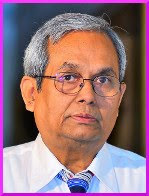
Missionary, Humanitarian, and Human Rights Worker Father Richard W. Timm, CSC, Dies


Father Richard W. Timm, CSC
Photo courtesy via Dhaka Tribune

xxx
Bangladesh minister Mizanur Rahman Chowdhury
(left)givingAbu Sayeed Chowdhury Award
 for human rights to Father Richard W. Timm, CSC

Photo courtesy: the dailystar.net/


Father Richard William Timm, CSC (1923 - 2020), an American missionary priest, educator, humanitarian, and human rights worker in Bangladesh died of old-age complications in South Bend, Indiana, USA, on September 11. He was 97 years old. He worked in Bangladesh for 65 years. 

First, he came to Bangladesh in 1952 as a professor at St. Gregory's College (the precursor of Notre Dame College) and did further study and research on nematodes. He discovered a few unknown types of nematodes, one of which was named 'Timmia parva' (small Timmian worm) after him. 

Later he was the principal of Notre Dame College, served 1970-cyclone affected people in Monpura Island in the Bay of Bengal through a voluntary organization called 'HELP.' He also served the 1971 liberation war-affected people as the Planning Officer of the Christian Organization for Relief and Rehabilitation (CORR), which later was renamed Caritas Bangladesh. 

He founded and became Secretary of the Episcopal Commission for Justice and Peace in Bangladesh. Through this Commission, he worked relentlessly for the human rights of ordinary people in Bangladesh. 

Father Timm was also the author of several books. Among the books are -- a textbook on college biology (this book's name is not known to us now),  The Plant-Parasitic Nematodes of Thailand and The Philippines (SEATO: 1965), The Church and Development in Bangladesh (Dhaka: Caritas Bangladesh, 1994), On Building A Just Society (Dhaka: Caritas Bangladesh, 1994), Forty Years in Bangladesh: Memoirs of Father Timm (Dhaka: Caritas Bangladesh, 1995), History of Holy Cross Priests in Bangladesh Since Independence: 1971 - 2000 (Dhaka: Provincial, Holy Cross Fathers, 2000), and 150 Years of Holy Cross in East Bengal Mission (Dhaka: Congregation of Holy Cross, 2003). 

After being the only nematologist in Bangladesh, he, in the 1950s and 1960s, wrote over 70 scientific papers. 

He was the recipient of a number of honours and awards. Among these are The Abu Sayeed Chowdhury Award for human rights in Bangladesh, the Pro Ecclesia et Pontifice (For the Church and the Pope) award from Pope Paul VI (1978) for his service to the 1971 war-affected people of Bangladesh, the Ramon Magsaysay Award (1987), a medal from the Pontifical Council for Justice and Peace of the Vatican in recognition of his contribution to education, charity, justice, and peace in Bangladesh (2009), and honorary citizenship of Bangladesh from the government.

To know more on Father Richard W. Timm, CSC, please read the following:


Bookmark and Share

Wednesday, February 19, 2020

'Tiger Widows' of Bangladesh and India Are Shunned and Discriminated


'Tiger widows' -- wives named so after their husbands had
been killed by tigers in the Sunderbans forest in Bangladesh
Photo courtesy: www.thedailystar.net/

The Sunderbans mangrove forest, declared as a UN heritage site, encompasses a vast area of the South-western part of Bangladesh and the south-eastern part of India. This forest has tigers of several species, including the world-famous 'Royal Bengal Tiger,' deer, crocodiles, and other animals. Its waterways teem with different species of fishes. It is also famous for its valuable timber and honey. 

There are people who go to the forest to procure timber, honey, and fish. From time to time some of these people are attacked by tigers and killed. 

Their wives are blamed for their 'bad luck' and they are then shunned and discriminated against. 

The governments of Bangladesh and India and non-government organizations (NGOs) need to take action to properly educate the local people for dispelling their superstition and stigma against these widows. 

For more on the subject, please read the following:


Bookmark and Share

Tuesday, November 5, 2019

A Book on the Laws for Christians of Bangladesh


Christander Jonnya Beboharik Aiin Porichiti 
(Introduction to the laws for Christians of Bangladesh),
Edited by Advocate Father Albert Thomas Rozario)
This Bengali-language book, Christander Jonnya Beboharik Aiin Porichiti (An introduction to the laws for Christians of Bangladesh), edited by Advocate Father Albert Thomas Rozario -- a Catholic priest of the Archdiocese of Dhaka.

Published by the Justice and Peace Commission of the Catholic Bishops' Conference of Bangladesh and Caritas Bangladesh in September of 2007, this book, in 33 chapters, lays out the land laws, personal and family laws, and criminal laws specifically relevant to the Bangali and indigenous (tribal) Christian communities of Bangladesh.

The specific topics covered in the book are: Historical background of the land management and land preservation, some important aspects of land management and preservation, the outlines of the land management, land reform laws of Bangladesh, land survey, the methods of land management and preservation of land rights, khotian (ledger book) and porcha (settlement record), laws on land purchase and registration of documents, land documents, laws on gift and gifting of land, laws on making wills, power of attorney, mutation, land taxes, pre-emption of khas land (government-owned land),  handover of the vested land (revised) laws of 2011, law suits, Bangladesh Christian inheritance laws, indigenous peoples, land rights of the indigenous peoples of Chittagong Hill Tracts, land problems: land lease, the realisation of the Chittagong Hill Tracts Agreement, Christian family laws, Christian marriage and the Church laws (canon laws), marriage under the Church's Canon Laws (applicable to the Roman Catholics only), divorce (dissolution of marriage), the Sacrament of Marriage: According to the Canon Law of the Catholic Church, affidavit (changing of one's first name or surname), arbitration and the limits of the social trials in the traditional laws,  laws on children, ezahar or the First Information Report, jamin (bail), ezahar, chargesheet, final report, and techniques of jamin), General Diary (G.D.), Bangladesh judicial system, different types of crimes and their punishments, legal terminology, some legal abbreviations, and, finally, a list of some measurements. 

This book is a helpful aid to understand the laws relevant to the Christians of Bangladesh. Every Christian family should have a copy of this book in its collection.


Bookmark and Share

Tuesday, November 13, 2018

Brother Ronald F. Drahozal, CSC, Is No More


Brother Ronald F. Drahozal, C.S.C., the pioneer of treatment
and rehabilitation of drug addicts in Bangladesh
Photo courtesy: Prothom Alo (Bengali daily)

The Congregation of Holy Cross Brother Ronald F. Drahozal, C.S.C., with decades of service to the treatment and rehabilitation of drug addicts, especially street drug addicts, in Bangladesh, died on October 15 at Dujarie House of Holy Cross Village at Notre Dame, Indiana, USA. He was 81.


In 1988, Brother Drahozal founded BARACA (Bangladesh Assistance and Rehabilitation Centre for Addicts) in Dhaka. It is now a Caritas project run by Holy Cross Brothers. In 1994, he founded APON (Ashokti Punorbashon Nibash -- Drug Rehabilitation Residence) in Dhaka, and later in 2007, it moved to a new and spacious facility in the district of Manikganj where hundreds of male and female addicts receive service. 

This American Brother's selfless service drew the attention of many in Bangladesh and abroad. He received several accolades. Recognizing his service, the Bangladesh government awarded him a medal and granted him citizenship of Bangladesh. 

For details on him and his work, please read the following:


Bookmark and Share

Wednesday, October 3, 2018

Father Richard J. Novak, C.S.C: A U.S. Missionary Killed In A Hindu-Muslim Riot In East Pakistan in 1964


A book on the life of U.S. Holy Cross missionary
Father Richard J. Novak, C.S.C. (1935-1964),
a professor at Notre Dame College, Dhaka 
Image courtesy: amazon.com/

Father Richard J. Novak, C.S.C. (1935-1964) was an American Congregation of Holy Cross missionary priest to the then East Pakistan (called Bangladesh after the independence from Pakistan in mid-December of 1971). On completion of his priestly studies in Le Mans, France, Dhaka's then-Archbishop Lawrence Leo Graner, C.S.C. ordained him there on June 29, 1961. 

In 1963, he went to East Pakistan as a missionary. After studying Bengali for a short time in Barisal, he began to teach Logic at Notre Dame College in Dhaka. From the beginning, he was deeply interested in the local people and their language and culture. 

"He was very friendly and likable and showed his unmistakable interest in people...He got around to more places than most of our men who have been there for many years. People everywhere still remember him. I used to worry about him, though, because it seemed to me that his liberal spirit was liable to get him into trouble sooner or later," wrote Father Richard Timm, C.S.C., a fellow missionary, and professor at Notre Dame College, on Feb. 6, 1966. 

 In early 1964, there was a Hindu-Muslim riot in India and Pakistan. In East Pakistan, the riot was severe in Hindu-populated Narayanganj and Khulna. Some Hindu riot victims were being treated at Holy Family Hospital in Dhaka. On January 15, Father Novak went to the hospital and wanted to extend his assistance. When a Hindu nurse-trainee at the hospital asked an American nun if there was anyone to help locate her father in Narayanganj where he worked at the Dhakeswari Cotton Mills, Father Novak was told of the request. Next day, on January 16, Father Novak, risking his life, bicycled 10 miles distance to Narayanganj and tried to cross the river on a ferry to reach the mills. On the boat, some Muslim youths attacked him and, on reaching the other side, killed him with lethal stabs and threw his corpse to the river. 

From that day news on his whereabouts was unknown in Dhaka for eight days. Then, some local Muslims from Narayanganj came to Dhaka and gave the Notre Dame College priests the terrible news. 

On the occasion of the remembrance of Father Novak in Johnstown, Pennsylvania, USA, on January 27, 1964, Father Arnold A. Fell, C.S.C., wrote: "There is a sort of perfect unity in Father Richard's life in that, as far as we know, he also met death, like Christ, in the midst of the people he had come to help and succor. And from what we know he also met death on an errand of mercy, trying to help those who were threatened by the communal Hindu-Moslem riots that were raging in and around Dhaka...in the fuller, deeper sense of the word, 'a martyr is one who dies giving witness to Christ.' In this full, deep sense Fathe Richard Novak died a martyr." 

For more on Father Richard J. Novak, please read the following:


Bookmark and Share

Monday, September 17, 2018

Historic 7th March 1971 Speech of Bangabandhu Sheikh Mujibur Rahman of Bangladesh


Bangabandhu Sheikh Mujibur Rahman giving his historic speech 
in Ramna Racecourse (later called Suhrawarthy Uddyan) of Dhaka on March 7, 1971
The original b/w photo digitally painted by Adrian D'Costa (Sept. 6, 2018)

Bangabandhu Sheikh Mujibur Rahman, the Founding Father of Bangladesh, delivered an impassioned speech on March 7, 1971, among widespread tension between the Pakistan army in power and the common people of East Pakistan (later called Bangladesh), at the then Ramna Race Course (later renamed Suhrawarthy Uddyan) in Dhaka to a huge crowd of about two million people. 

In this speech, he called on the freedom-loving people of East Pakistan to keep their struggle on until realization of their full rights and privileges, and, if necessary, independence from the Pakistani ruling elite, dominated by the military. 

Please read below about this speech and listen to Bangabandhu's inspiring voice:

Related Item: 

Bookmark and Share

Monday, September 10, 2018

Bangladesh Catholic Church: Matters Clergy Sexual Abuse


Father Walter William Rozario of Borni Parish of Rajshahi Diocese, 
Bangladesh, in 2018
Photo courtesy: www.ucanews.com/

Father William A. Christensen, S.M., from St. Louis, USA, in 1995 
Photo courtesy: www.stltoday.com/

A greater number of foreign missionaries and local priests in Bangladesh have been dedicated, honest, and truthful to their vocation, but some of them did not work as expected. As in other countries, “One-in-twelve principle” also applies to Bangladesh. It means one-in-twelve – some among many – will act quite badly. This principle is derived from Jesus’ own example with his twelve disciples, among whom one (Judas the Iscariot) was the most rotten apple.  


Sexual abuse is nothing new in Bangladesh. It is present in every community (Muslim, Hindu, Buddhist, and Christian) and culture. Yet, when a religious leader, like a Catholic clergy (priest), gets involved in this sin or crime, it is a horrendous news to the faithful. Why? Because the clergy is held in a high position, he is a holy person who is supposed to have a higher level of integrity, honesty, and justice. He is the one who teaches others about being holy, honest and just. 

In the Old Testament of the Bible, we see God created the heavens and the earth as well as Adam and Eve. He then blessed them and told them: “Be fertile and multiply; fill the earth and subdue it” (Gen 1:28). Later, God made a covenant with Noah and told him: “Be fertile and multiply and fill the earth” (Gen 9:1). God gave these persons sex organs for multiplication. He did not tell them to place their organs under lock and key. So, multiply they did. When things went haywire, God gave the Ten Commandments, whereby he forbade adultery and coveting of one's neighbour's wife.  Then also sanctions came on homosexuality. People, later, came up with their own social restrictions on and barriers to the use of their sex organs indiscriminately. Especially from the New Testament time, some also came up with the idea of celibacy (a state of unmarried life) so that the person dedicated to celibacy can give his or her full time in the service of God. Sexual chastity goes along with this celibacy in the Catholic Church. Did the sex activities and sex abuse stop among the married and unmarried (celibate) people? No. The sex abuse crisis in the Catholic Church amply proves it. The priests' celibacy and sexual chastity, idealized, idolized and heavenized (priests have been termed alter Christus -- meaning 'another Christ' -- and they can turn bread and wine into Christ's body and blood, which even heavenly angels are unable to accomplish) by the Church, almost turned into a fiction.  

Catholic clergy sex abuse, of which we hear and read so much now, was always present in the universal Catholic Church. In earlier times, the married clergy and, later, celibate (unmarried) clergy have been involved in sexual abuse. To learn more, please click on the following article: A Very Short History of Clergy Sexual Abuse in the Catholic Church (by Father Thomas Doyle, O.P., J.C.D., C.A.D.C.).  


In Bangladesh, as almost in any other country, Catholic laymen and laywomen, from their childhood, learn to have a special respect and slavish fealty to and unconditional trust on the priests and bishops, who are considered holy because of their position as God’s anointed agents on earth. Nothing can be done in words or deeds to disrespect or belittle them. There is also the fear of being punished sacramentally (banning participation in the holy communion, church marriage, church burial, etc.) or otherwise. For these reasons, no one wants to come forward to complain against clergy sex abuses. As a result, very few cases of abuse came to the limelight so far.

In the past, there were a few clergy abuse cases which were open secret but remained in a hush-hush situation. Victims of those cases were underage boys and girls (pedophilia), adolescents (ephebophilia), young men -- including seminarians (homosexuality), married and unmarried women -- including Sisters or nuns (heterosexuality), incest (sexual relations with close relatives, e.g. in-laws), and fathering of children.

But things are gradually changing with widespread education among the laity, more awareness of one’s human rights, an increase in critical (analytical) thinking, the spread of feminist ideology including women’s rights -- as being emphasized in the recent #MeToo Movement, which resulted from women's actual experiences of sexual abuse in their workplaces, and, finally, the easy availability of the Internet and social media with their influences.

The abuse cases of Father William A. Christensen (a Marianist missionary from the USA) and Father Walter William Rozario (a local diocesan priest) not only came to the limelight but also became international news. 

What are the actions that the Bangladesh bishops and Religious superiors can take?

1    1. When a serious complaint is received against a Church personnel, remove the person from the position held during the complaint until the proper investigation is completed.

2    2. In the investigation of sexual abuse, involve certain persons from the priests and Religious Brothers and Sisters as well as laymen and women to have more fairness in the process. When complaints are received, patiently and with enough time, listen in depth to what both the sides (the accused and the accuser) involved in the case have to say.

3    3. If anyone, after giving a second chance, commits another incursion (crime), defrock him. It is better for him to live a laicized life than “burn” by remaining in the priesthood, (Brotherhood, or Sisterhood). By repeat failures or criminal actions, the person is trying to tell that he is not able to keep his solemn promise of celibacy and chastity anymore. He wants to be out.

4    4. Sending a person for a life of “meditation and prayer” means nothing to the person as well as to his victim(s). He was supposed to meditate and pray more than once a day for years but failed to do so. How is it possible for him/her to do it right now?

5    5. Do not rotate the person from one parish or institution to another or from one country to another. From other countries’ experience, it is found that such persons in most cases repeat the same sins and crimes in new places, too.

6    6. Arrange special orientation on awareness building. Many of the priests, Brothers, Sisters (nuns), seminarians, catechists, teachers, school-boarding masters and mistresses, and Catholic NGO workers, who regularly deal with people (men, women, youth, teens, adolescents, and children), do not know what constitutes sexual harassment, sexual molestation, sexual abuse, sexual assault, pedophilia, hebephiliaephebophilia, homosexuality and their legal repercussions. It is imperative that, from now on, they get this orientation so that they themselves can be careful with others and help others to be careful about sexual matters.

1    7. The Pratibeshi (neighbour) is the national Catholic weekly of the Catholic bishops of Bangladesh. Most of its readers reside in the rural areas. It can play a vital role in the proper formation of the Catholics by disseminating information on and building awareness of clergy sexual abuse that is being revealed publicly all over the world for more than a decade now. This weekly places a greater emphasis on pietistic, devotional, and dogmatic matters than real-life Christian living in this fast-changing world.  It is almost completely quiet on this serious problem of clergy sex abuse – as if nothing is happening on this matter anywhere in the world. It also does not say much about what the Pope and the Vatican are saying on this particular subject. If the Holy Bible can clearly and graphically speak of both the holiness and sin, the good and evil, why can’t the Pratibeshi do the same? The conversation on clergy sex abuse (happening anywhere in the world) will help priests and other Church personnel to be careful in their behavior and, at the same time, it will help its readers to be alert and careful about not becoming victims of abuses in their daily life as well as in Church life. 
     

I    8. It is also important to note that the Catholic Church has a definite teaching on participation in other’s sins. If any bishop, cardinal, or Religious superior anywhere in the world tries to avoid, ignore, or cover up sex abuse of anyone under his care, he participates in the sins (of sex abuse, which is also considered as crimes in any country’s civil law) of that sex-abuser. 

9. In certain parts of the world today, clergy sexual-abuse victims no longer wait for the cumbersome and slow-paced efforts of bishops and Religious superiors in taking proper action against clergy sex-abusers. Victims contact the local police directly and make formal complaints about quicker action. Bangladesh Church leaders need to learn from these experiences of other countries and take proper action timely so that they can avoid any unsavoury and nasty situation later.

10. Pope Francis, meeting 74 newly-consecrated bishops from 34 developing countries in the Vatican on Sept. 9, said, “Just say no to abuse – of power, conscience or any type.” He also said that to do so the bishops must reject the clerical culture that often places clergy on a pedestal and which Francis himself has blamed for fueling the sex abuse scandal. He also reminded the new bishops that they were to serve their flocks, and must work in communion with the Church, not as lone actors. (For more on this, please see Pope tells bishops to fight abuse, culture behind it). Catholic bishops of the Philippines, reacting to the Vatican official accusing Pope Francis of ignoring misconduct allegations against American Cardinal McCarrick, vowed not to cover up clergy sex abuse in their country. (That Vatican official is Archbishop Carlo Maria Vigano, who in his recent 11-page testimony accused Pope Francis of covering up homosexual relations of U. S. Cardinal Theodore McCarrick with some seminarians.)

In the end, our bishops in Bangladesh will be the winners if they are quick, forthright, transparent, and accountable for their actions on clergy sex abuses in the country. 

For more on the Catholic clergy sex abuse, please click on the following:


Related Items:

Pope Francis blames clericalism for the worldwide clergy sexual abuse. For details, kindly click on the following:

(Updated on Oct. 4, 2018)


Bookmark and Share

Saturday, December 2, 2017

Pope Francis Visits Mother Teresa's Home, Meets Priests and Religious, Visits Historic Church and Cemetery, and Talks to Youths Before Departure from Dhaka


Pope Francis' Third and Final Day in Bangladesh

Pope Francis visits historic Portuguese-built 17th century-church and cemetery at Tejgaon, Dhaka (Dec. 2, 2017)
Photo courtesy: Reuters

Pope Francis today (December 2) made a private visit to the Mother Teresa's Home, run by her Missionaries of Charity Sisters at Tejgaon and met and spoke with the Sisters and the orphans, and old and sick people who receive their care. He then met a few hundred priests, Brothers, Sisters, consecrated men and women, seminarians and novices at the nearby Holy Rosary Church. He also visited the adjacent Portuguese-built historic old church and cemetery. Finally, he went to Notre Dame College in Motijheel area of Dhaka and talked with the youth belonging to different religions before leaving for the Dhaka International Airport from where he flew to Rome in a Biman Bangladesh Airlines plane. It is noteworthy that he came to Bangladesh on November 30 morning from Myanmar on a Biman Bangladesh Airlines plane, too.  

For more on Pope's third and final day in Bangladesh, please click on the following: 

(Updated on Dec. 4, 2017)

(To go to Pope Francis's First Day in Bangladesh, click here)


Bookmark and Share

Friday, December 1, 2017

Pope Francis Ordains Priests And Meets With Bishops, Inter-religious Leaders and Rohingya Refugees in Dhaka


Pope Francis's Second Day in Bangladesh

Pope Francis ordains a deacon to Catholic priesthood at the solemn Mass at Suhrawardy Uddyan, Dhaka (Dec. 1, 2017)
Photo courtesy: CTV photo via BTV

More than 80,000 Catholics from all over Bangladesh attend the papal Mass at Suhrawardy Uddyan, Dhaka (Dec. 1, 2017)
Photo courtesy: Reuters

Pope meets with Catholic Bishops of Bangladesh at the Archbishop's House, Ramna, Dhaka (Dec. 1, 2017)
Photo courtesy: Osservatore Romano

More than 80,000 Catholics from around Bangladesh, a number of government officials, members of foreign diplomatic corps, inter-religious leaders, and ecumenical Church leaders attended Pope Francis's solemn concelebrated Mass at Suhrawarthy Uddyan park in Dhaka today, reports various news sources. 

In his homily, Pope Francis expressed his gratitude to all and said: "I know that many of you came from afar, for a trip for more than two days. Thank you for your generosity. This indicates the love you have for the Church," reports the Daily Star. 

He also encouraged and inspired 16 deacons by saying: "you are to be raised to the Order of the Priesthood.  For your part, you will exercise the sacred duty of teaching in the name of Christ the Teacher.  Impart to everyone the word of God which you have received with joy.  Meditating on the law of the Lord, see that you believe what you read, that you teach what you believe, and that you practice what you teach."

Meeting Bangladesh's Catholic bishops at the Archbishop's House at Ramna, he appreciated the pastoral plan of the bishops and encouraged them to continue their work earnestly. He laid emphasis on the importance of the laity in the Church, saying: "At the same time, I would ask you to show ever greater pastoral closeness to the lay faithful.  There is a need to promote their effective participation in the life of your particular Churches, not least through the canonical structures that provide for their voices to be heard and their experiences acknowledged.  Recognize and value the charisms of lay men and women, and encourage them to put their gifts at the service of the Church and of society as a whole.  I think here of the many dedicated catechists in this country, whose apostolate is essential for the growth of the faith and for the Christian formation of the next generation.  They are true missionaries and leaders of prayer, especially in the more remote areas.  Be concerned for their spiritual needs and for their continuing education in the faith."

In the inter-religious peace gathering at the same compound, Pope Francis welcomed all and encouraged them to work for solidarity, harmony, and peace. He also said: "Openness of heart is likewise a path that leads to the pursuit of goodness, justice and solidarity.... A spirit of openness, acceptance and cooperation between believers does not simply contribute to a culture of harmony and peace; it is its beating heart."

Meeting with some Myanmar Rohingya refugees in the gathering, he said: "The presence of God today is also called Rohingya... In the name of all of those who have persecuted you, hurt you, I ask forgiveness. I appeal to your large hearts to give us the forgiveness that we are asking."


Pope Francis rides on a cycle rickshaw at the Archbishop's House at Ramna, Dhaka (Dec. 1, 2017)
Photo courtesy: AP

Pope Francis also rode on a cycle rickshaw in the Archbishop's House compound in Dhaka. He is the second Pope to do so. The first pope to ride on a rickshaw was Pope John Paul II in his 1986 visit to Bangladesh. The Guinness Book of World Records should consider to mention Pope John Paul II's name as the first rickshaw-riding pope in the world in more than 2,000-year history of the Catholic Church. 

For more, click on the following:


(Updated on Dec. 4, 2017)


Bookmark and Share