Wednesday, January 27, 2010

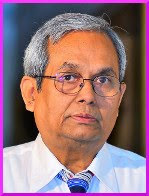
Bangladesh Justice Takes 35 Years To Punish the Killers of Sheikh Mujibur Rahman

_

Bangabandhu Sheikh Mujibur Rahman, the leader of
Bangladesh independence movement

Photo courtesy: Press and Information Department (PID),
Govt. of Bangladesh, 1972


After long 35 years, the government of Prime Minister Sheikh Hasina, daughter of Bangabandhu Sheikh Mujibur Rahman, hangs five of 12 convicted killers of the Bangabandhu (friend of Bengal) on January 28, 2010 early morning, reports The Daily Star of Dhaka.

Heavy security measures were taken both inside and around Dhaka Central Jail, where these convicted persons have been hanged: Lt. Col. Syed Farooq Rahman, Lt. Col. Sultan Shahriar Rashid Khan, Lt. Col. Mohiuddin Ahmed, Major Bazlul Huda, and army lancer A.K.M. Mohiuddin Ahmed. The Bangladesh Supreme Court on January 27 rejected the appeals of these men against their conviction.

On November 19, 2009, the Supreme Court had awarded death sentence to 12 living convicts -- of whom, these five men were already in Dhaka Central Jail, and six others (Lt. Col. Khandakar Abdur Rashid, Lt. Col. Shariful Huq Dalim, Lt. Col. A.M. Rashed Chowdhury, Lt. Col. Noor Chowdhury, Captain Abdul Mazed and Risaldar Moslemuddin) have been absconding from Bangladesh and living in different countries -- USA, Canada, Libya, and some European countries). One othe convicted person died in Zimbabwe, Africa.

Background

Bangabandhu Sheikh Mujibur Rahman gave the lead to Bangladesh independence movement in 1971. After independence, he gave leadership to the new country. Those who were pro-Pakistan and against the independence were looking for ways to undo the new country. They, along with some foreign countries, influenced and supported a group of young army officers to revolt and stage a coup against the elected government of Sheikh Mujibur Rahman.

These army officers, on August 15, 1975, attacked the house of President Sheikh Mujibur Rahman and brutally shot and killed him, his wife, two sons and their wives, and one young son and many others who worked in his house. A total of 20 people were killed in the house that night. Sheikh Hasina and her sister Sheikh Rehana, two daughters of Sheikh Mujibur Rahman, escaped the massacre because they were in Europe at that time.

When Sheikh Hasina came to power for the first time in 1996, she started the trial of these army officers by removing the "Indemnity Act" which was enacted by the killers with the help of Khondokar Mustaque Ahmed as the president of the new military government. This infamous Act barred anyone from taking action against the killers of Sheikh Mujibur Rahman and members of his family. Previously, Khondokar Mustaque Ahmed was important Awami League member and a minister of Bangladesh under Sheikh Mujibur Rahman.

In 1998, fifteen persons were found guilty and sentenced to death. In 2001, the High Court acquitted three. As Sheikh Hasina lost power as the Prime Minister in 2001, the new government of Khaleda Zia, her bitter rival, did not pursue the case any further.

After winning landslide victory in 2008, Sheikh Hasina restarted the case which came to conclusion with the execution of the five killers. Bookmark and Share

Monday, January 25, 2010

Bangali Taxi Drivers in New York Demonstrate Honesty and Integrity

_

(L-R) Mohammad Asaduzzaman Mukul and Osman Chowdhury
Photo courtesy (left: www.notundesh.com/ and right: www.dailymail.co.uk/)

When some highly-paid corporate CEOs and honchos have been raiding their companies bankrupt in New York, there are examples of poorly-paid persons winning over their greed and covetousness with plain honesty and integrity.

The stories of Mohammad Asaduzzaman Mukul, 28, and Osman Chowdhury,43, -- both from Bangladesh and working as taxi drivers in New York city -- are such examples.

Mohammad Asaduzzaman Mukul

It was Christmas Eve, December 24, 2009. Felicia Lettieri, 72, an Italian grandmother and six others hailed two taxis to go from midtown Manhattan to Penn Railway Station -- both in New York city. One of the taxis was Asaduzzaman Mukul's.

Mr. Mukul, a Bangladeshi medical student-cum-part-time taxi driver, later finds Ms. Lettieri's purse on the back seat of his taxi. When he opened it to look for any address, he found bundles of euros, some expensive jewelry, and a few passports with an address of Patchogue, Long Island, 60 miles away. Without even counting the money, his only thought at the time was to return the purse to the owner with its contents.

He then deposited his taxi to his company and called a Bangladeshi friend with a car and requested him to drive him to Patchgue following the address. When they reached the address, there was none available there. Yet, Mr. Mukul left a note on the door of the house. In the note he gave his cellphone number and asked the owner of the purse to call him so that he could return the purse.

Later the expected call came and Mr. Mukul again went there again to return the purse. The owner was Ms. Lettieri from Pompeii, Italy and she was extremely happy to get her purse back. There was US $ 21,000 worth euros in it. She wanted to give some money as a reward but Mr. Mukul declined it by saying that he was a devout Muslim and, therefore, he could not accept the reward.

Mr. Mukul went 240 miles (386 kilometres) in total spending his own money for vehicle gas but proved his honesty sacrificing any compensation.

Police and others had advised Ms. Lettieri that there was little chance of recovering the lost money and goods.

Francesca Lettieri, 79, the sister of Felicia Lettieri, told the Newsday that the honest taxi driver had saved her family's vacation. "We really love what he did," she said.

Mr. Mukul, a full-time student at a city college near his apartment in Jamaica, Queens, started to drive taxi a few days a week when his work hours were reduced at a factory job.

To a question of why he was so honest with the money, he replied: "My mother is my inspiration. She always told me to be honest and work hard."

He also said: "I'm needy, but I'm not greedy. It's better to be honest."

Osman Chowdhury

It was a day in February, 2007. A woman from Dallas, Texas, rode Osman Chowdhury's taxi to go from the Hilton Hotel in midtown Manhattan to an apartment about 15 blocks away in New York city.

Some hours later, when Mr. Chowdhury opened his taxi's trunk to keep luggages of three other passengers, he realized that the woman from the hotel got down from the taxi without taking her luggage.

He then drove to the apartment, as since he did not know the apartment number of the woman, he took the suitcase to the headquarters of the New York Taxi Workers' Alliance where he is also a member.

When opened, the Alliance president and Mr. Chowdhury found two display cases with 31 diamond rings inside. After finding a luggage tag inside with a Dallas phone number, they called and reached the woman's mother and told her about the find.

Later in midnight, the owner of the suitcase went to the Alliance office and retrieved her luggage.
When the woman offered Mr. Chowdhury a cheque for US $ 100, he first declined it but later accepted it on insistence to cover the fares he lost while trying to locate her.

Osman Chowdhury was a contractor in Bangladesh before coming to the USA 17 years ago. He drove taxi in New York by renting one.

"I'm not going to take someone else's money or property to make me rich. I don't want it that way," he said. "All my life, I tried to be honest. Today is no different," he said.

Bangladesh School Textbooks Should Include These Stories

These stories of real-life honesty in face of temptations and competitions should get a place in Bangladesh School Textbooks. The next generations of Bangali students will find them inspiring.

What Do We Learn From These Stories?

Some strangers, some foreigners in our midst may be bad, but all strangers and all foreigners are not evil-charactered. Some Muslims may be terrorists, but all Muslims are not so.

We may recall the parable (story) where Jesus Christ mentioned of the "Good Samaritan," who was neither a Jew nor a Christian, but a pagan! (See the Bible: Luke 10: 25-37)


Bookmark and Share

Sunday, January 24, 2010

The Quotation of the Week (January 24 - 30, 2010)


A sandy bank at Char Jhaukanda in the Padma River, Faridpur District,
Bangladesh. A char is a silted island in a river. This special grainy effect
on black-and-white film resulted from the humidity-caused fungus!


Photo (1985) © Jerome D'Costa

Bookmark and Share

Friday, January 22, 2010

NOTUN DESH: A Publication of Toronto


Notun Desh -- an online bi-lingual (Bengali and English) weekly --from Toronto
  
Notun Desh (new country), edited by Serene Ferdous, is the online Bangla (Bengali) weekly that debuted in Toronto last year. It is updated every Wednesday. It is perhaps the first regular online newspaper in Bangla in Canada. There are, of course, several other Bangla print newspapers that are being published from Toronto.

This weekly deals with news, articles and opinions on events and issues of both Canada,  Bangladesh and world featuring politics, economy, entertainment, environment, literature, sports, and more. It also has a small English section.

Email contact: contact@notundesh.com

It's available online at: Notun Desh

If you can't read it, you may download "Solaimanlipi" Bangla font from: http://www.notundesh.com/Bangladakha.html/

(Updated on June 5, 2916) 
 
Bookmark and Share

Monday, January 18, 2010

A Silverman Impersonates Elvis Presley, Entertains the Public

_


Elvis Presley impersonation at the Scarborough Town Centre
Photos (Toronto: January 10, 2010) © Jerome D'Costa

The real Elvis Presley with his typical musical pose
Photo courtesy: http://wallpapers.free-review.net/

A Silverman impersonates Elvis Presley and entertains the public at the Scarborough Town Centre. It is one of the busiest malls in Toronto. In the weekends, thousands of shoppers and window-shoppers descend on to this mall.

It was Sunday, January 10, 2010. In front of the Sears store, Elvis Presley songs were blaring from a cassette player. Dozens of onlookers, young and old, transfixed their gaze on a single figure on a small pedestal. The person is bathed in silver colour from his hair to his shoes. Because of his silvery colour, I call him "Silverman." He calls himself "Silver Elvis" -- large silver letterings done in metal stand on the floor around the pedestal. Several metal containers are also placed there for the public's monetary contribution.

Some of those who see the silvery figure for the first time, mutter among themselves, "It's a statue!", but others who know the trick say, "No, it's a man, it's a man!"

This confusion arises at what point of time you look at the silvery figure. At one time, you see it with a Presley-like statuesque pose, at another time he is shifting to his next pose!

Most of the onlookers shake their bodies in consonant with the beat of Presley's songs. This is a good example of public amusement through impersonation. This is one of the ways the Elvis Presley legend lives on from one generation to the other.

The Real Elvis Presley

Elvis Aaron Presley (1935-1977), popularly known as "Elvis Presley," was an American pop singer of international repute. His music was influenced by American country, Christian gospel and black R&B music. His singing style and acrobatic body postures were unprecedented and unique.

The young and the old of the day were attracted to his music like bees to flower nectar. Teenage girls would be "delirious" and were mad after him. Throngs of groupies would follow him from one singing venue to the other.

Elvis Presley also acted in films -- 33 in all. His music is still popular worldwide. Born in Tupelo, Mississippi, he died of overdose of medicines in his home in Memphis, Tennessee.

Elvis Presley is dead, but he still lives on in the hearts of millions. Bookmark and Share

Sunday, January 17, 2010

The Quotation of the Week (January 17 - 23, 2010)


The Winter

Graphics (Toronto: January 16, 2010) © Joachim Romeo D'Costa


Bookmark and Share

Thursday, January 14, 2010

What Haiti Earthquake Victims Need

_

Map courtesy: http://atlas.mapquest.com/

Port-au-Prince, the capital city of Haiti is in total devastation. This is considered to be the worst earthquake disaster in a century. The saddest thing is that the government of Haiti was totally incapacitated, there were almost no government personnel to help in the rescue efforts in the first day or two. The world watched in horror how the common people were trying their best with their most limited and amateurish equipment and implements to rescue fellow Haitians from the rubble. Thousands of dead bodies are still lying on the sidewalks.

Fortunately, the world governments, voluntary agencies, institutions and individuals responded immediately to the catastrophe. Although quite late, their efforts will definitely save many precious lives.

Immediately after any disaster, the first 72 hours (three days and three nights) are very crucial in rescuing and saving lives.

Immediate Response and Relief

As workers of Caritas Bangladesh and later World Vision of Bangladesh, we had to deal with several deadly flood and cyclone disasters in Bangladesh in the 70's, 80's and 90's. From those experiences we can say that the following emergency response and relief materials are needed in the first 72 hours:

  • Consideration of local environment, weather condition, local customs, and people's food habits (Christians can eat almost everything, Hindus can't eat beef, Muslims can't eat pork, etc.) is very important for relief effort.
  • Employ rescuers and rescue machineries and vehicles. Bury the dead immediately.
  • Initially distribute dry foods (bread, immediately edible (munchable) cereals, dry fruits, snack bars, chocolate bars, edible nuts and seeds, chips, flattened rice, puffed rice or rice crispies and so on. Due to disaster, cooking facilities may not be immediately available.
  • If some people still possess cooking facilities, bulgur wheat, oatmeals, rice, lentils and beans can be given to them.
  • Provide bottled water or water purification tablets. Much of the water available in the disaster area gets polluted.
  • Provide enough medical personnel and medicines. Rush the seriously wounded to nearby hospitals or clinics and, if these are not available, arrange field clinics.
  • Arrange to provide cooked food through gruel kitchens.
  • Give cash to victims so that they may purchase food from the locality, if available.
  • Tents are very important to save the exposed victims from the sun or rain.
  • Battery-run torchlights and battery-operated radios are urgently needed.
  • For sleeping or just sitting and resting, mats, cheap carpets, inexpensive blankets and sleeping bags are important.
  • Clothing for men, women and children.
  • Baby food, powder milk, and energy drinks like 'Ovaltine' are important for children.
  • If possible, give sandals, cheap shoes and boots.
  • If possible, provide hurricane lanterns and kerosene oil, candles and match sticks.
  • Small pots and pans also can be given to those who have access to cooking facilities.
  • Building temporary public toilets is very crucial in stopping diseases to spread.
Some Useless Relief Items

When a disaster strikes and the news is everywhere, people get very much carried away and feel to be very generous. They want to give anything they think would be useful without consideration of the location, culture and habits of the disaster victims. There are items that should not be sent as relief items:

  • Chewing gums.
  • Warm clothes and heavy blankets in a tropical or warmer country.
  • Toothpastes and tooth brushes.
  • Typical women's clothes of western countries, such as undergarments, brassieres, hats and caps, etc. A country, where women do not wear western dresses, will find these items not only useless, but also embarrassing.
  • Expired or soon-to-expire goods, food items and medicines. What you cannot or should not use for yourself must not be given to others.
Rehabilitation and Development Work (Long Term)

Rehabilitation and development work take longer time to accomplish. These should be well-planned and coordinated, otherwise there is likelihood of duplication of work. Under this category the following can be done:

  • Building infrastructures: Houses, institutions, government offices and roads need to be repaired and rebuilt.
  • In a tropical country, one-storey houses can be made of corrugated iron-sheet roofs and walls. Pillars of the house can be made of concrete. Houses with more than one storey should be made with concrete and bricks strictly following local conditions and building codes.
  • Medium and deep drinking water tubewells need to be repaired or installed.
  • Educational materials (school exercise books, pencils, pens, papers, school books, school bags, etc.) are to be given to affected students.
  • Crop and vegetable seeds for farmers.
  • Fertilizers, irrigation system and the relevant agricultural facilities need to be restored.
  • Assistance in income generation is important. Under Test Relief work, men and women can be employed on daily wage basis to do repair or rebuilding work -- houses, roads and other infrastructure.
  • No asbestos sheets should be used in building purposes. It is now proven that asbestos is dangerous to human health.
It's An Opportunity to Build Port-au-Prince Anew

In the news it was told that this city has accessibility problem. It has only a few main roads with many unplanned narrow roads. Roads get clogged all the time.

Since most of the houses are devastated or precariously standing, a well-thought-out plan needs to be taken to demolish the standing houses and rebuild Port-au-Prince with more and wider roads. The UN can give a leadership and coordination in this respect. Bookmark and Share