Saturday, January 10, 2009

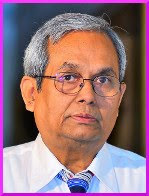
Amit Chakma Named Canadian University President

_

Amit Chakma, 49, a member of the Chakma ethnic group of the Chittagong Hill Tracts, Bangladesh, has been named the 10th President and Vice-Chancellor of the University of Western Ontario at London, Canada. He will take over his new responsibility on July 1, 2009, reports the Western News, weekly newspaper of the University of Western Ontario.

He is the present Vice-President and Provost at the University of Waterloo, Ontario, besides being a professor of Chemical Engineering and Environmental Studies. In 1998, he was named "Canada's Top 40 Under 40."

Our auvinondon (congratulations) to Mr. Amit Chakma!


Bookmark and Share

Thursday, January 8, 2009

The Photo Meditation of the Month (January, 2009): PEBBLES


__
-Pebbles

Pebbles on the Rainbow Haven Beach, 
Nova Scotia, Canada 
Photo (August 15, 2007) © Jerome D'Costa

God's creative force is at work. What once were stones and boulders, turn into pebbles in the next.

Years of sun, wind and water turn mountain stones into boulders that hurtle down mountain sides. They crash against each other. They wade a lot of water and endure hard grinding and thrashing bearing immense pressure of water. On their way down the rivers and rivulets, neither can they view the sky, nor the direct sun, nor the lush greeney around them.

Ultimately, one day, they evolve into smooth and attractive pebbles. Pebbles that symbolize bonding, perseverance, unity, and beauty in togetherness.

Our life also undergoes a sea change like the pebbles. In the beginning, we are rough, we are clumsy, we are awkward. Constant pressure of relationship, pressure of study and pressure of work change us gradually. Trials and tribulations, pessimism and negativity, sufferings and frustrations sharpen our life, bring discipline in our life and beautify our life. We then become mature and complete men and women.

Bookmark and Share

Toronto: Some Jews Protest Israeli Incursion in Gaza

_
In protest to the Israeli invasion of Gaza Strip, eight Jewish Canadian women staged a protest sit-in inside the Israeli consulate on Bloor Street in Toronto yesterday. The Royal Canadian Mounted Police (RCMP) arrested and handcuffed the women and took them away from the consulate and released them later, reports The Toronto Star.

Outside the consulate there were a larger group of protesters among whom were Israeli peace activists, filmmakers, and students. University professor, journalist and political activist Judy Rebick was one of the eight women sit-inners. " We call on all Jews to speak out against this massacre and demand that Israel stop the bombing, pull out of Gaza and make a just peace with the Palestinians," she said. She also mentioned that Jewish Canadian women were outraged and they wanted to distance their religion from Israel's actions.

"There are many Jews here in Canada, in the United States, in Europe, in Israel who are ashamed, who do not want this massacre to take place in our time," Rebick said. Among the protesters outside the consulate was filmmaker Cathy Gulkin, who said: "There are Jews that do not follow the Israeli line and are sickened by what is happening in Gaza." Bookmark and Share

Wednesday, January 7, 2009

Catholic Church All Along Expressed Concern Over Gaza Situation

_Cartoon © Ujjal Peter D'Costa

In the thick of Israeli bombardment in Gaza, Pope Benedict XVI deplored the escalation of violence in Gaza where more than 400 were dead at the time. During the Sunday (January 4) noon blessing at the Vatican, the pope called for a serious dialogue between the Israelis and Palestinians as the only way out of the "perverse logic of conflict and violence," reports CNS. He called for a restoration of truce in Gaza and invited the international community in helping both sides out of the "blind alley."

The pope also added: "Today, in all the churches of the Holy Land, church leaders are calling on worshippers to pray for the end to the conflict in the Gaza Strip and for justice and peace for their land. I join in their prayers and invite you to do the same."

Mentality of Conflict

Jesuit Father Federico Lombardi, the Vatican spokesman, said that the latest escalation of violence was a provocation by both sides, and showed that both Hamas and Israel were caught up in mentality of conflict. CNS quotes him: "Hamas is a prisoner of a logic of
hatred, Israel of a logic of trusting in force as the best response to hatred. They need to keep looking for a different way out, even if it seems impossible."

"...violence, hatred and mistrust are themselves forms of poverty..."

Earlier on New Year's Day, which is also the World Day of Peace in the Catholic Church, Pope Benedict warned that "violence, hatred and mistrust are themselves forms of poverty -- perhaps the greatest -- that must be fought. The deep desire to live in peace...rises in the hearts of the great majority of the Israeli and Palenstinian peoples, once more placed in danger by the massive violence that has broken out in the Gaza Strip in response to other violence."

Caritas Internationalis' Call for End of Violence

Caritas International, the confederation of 162 national Catholic charities, on January 1 called for end of violence. It said that the loss of civilian lives has been deplorable. It also said: "The international community must use all its influence to ensure existing peace accords and resolutions are upheld."

Bishops Call on US to Help in Gaza

Bishop Howard Hubbard of Albany, chairman of the US Bishops' Committee on International Justice and Peace on January 1 called for a high-level US representative to be sent to help negotiate peace between Israel and Hamas. He sent this appeal in a letter to Condoleezza Rice, US Secretary of State, reports Zenit News.

He also wrote: "The rocket attacks on Israel must be stopped, and Israel's military attacks on Gaza halted....We ask you to urge the president to send a high-level personal representative to the region immediately to help negotiate a ceasefire and make provision for humanitarian aid to the people of Gaza."

"A ceasefire and humanitarian relief are indispensable intitial steps on the road to a two-state solution -- a secure Israel living in peace with a viable Palestinian state -- with justice and peace for both peoples," he added.

Irish Catholic and Anglican Archbishops' Appeal

On December 30, Cardinal Sean Brady, Archbishop of Armagh, and Anglican Archbishop Alan Harper, in a statement expressed their "distress and deepening concern for all innocent victims." They called upon both Israel and Hamas to disengage and cease all hostilities. They also mentioned: "We also call upon the international community and particularly the United States and European Union to bring maximum influence to bear to end all violence immediately and to create conditions that will lead to a just peace for Palenstinians and Israelis alike."

Latest Situation

According to the CNN, a three-hour Israeli-Hamas truce, intended for humanitarian aid into Gaza, collapsed immediately after it began on January 6. More than 100 trapped foreigners -- mostly Americans, Swedes and Canadians -- could not be evacuated.

Since the campaign began in Gaza on December 27, more than 600 Palestinians have been killed and 3,000 wounded. Among the wounded, one-third are women and children. Bookmark and Share

Sunday, January 4, 2009

Suggested To-Do's For New Bangladesh Government

__
The landslide victory of the Grand Alliance, headed by Sheikh Hasina of Awami League, is the accepted truth now. Congratulatory messages are pouring in from various countries. The USA already congratulated Bangladesh over the successful completion of the election.

Canada also sent congratulations to the people of Bangladesh. "We offer our best wishes to the people of Bangladesh, who in this election exercised the fundamental democratic right to choose who will govern their country and represent them on the world stage. We believe that full citizen participation is key to ensuring a credible election. The election marks a crucial moment in Bangladesh's history and an opportunity to set the country on a path toward sustainable democracy," wrote Lawrence Cannon, Canadian Minister of Foreign Affairs . "Canada will continue to assist the Government of Bangladesh in its efforts to build democratic and effective governing institutions," wrote Beverley J. Oda, Canadian Minister of International Cooperation.

"...absolute power corrupts absolutely"

The two-thirds majority seats in the Jatiyo Sangsad (national parliament) gives a tremendous power and pride to the Bangladeshi elected parliament members, who can now do and undo things easily. British historian and moralist Lord Acton (1834 - 1902) said: "Power tends to corrupt; and absolute power corrupts absolutely." The new MPs need to be cautious about it and strive hard to carry on the burdensome responsibility vested upon them. The overwhelming mandate received from the electorate, makes them more answerable to the public. This unique opportunity should not be wasted to really do good for the country.

Do's For the Elected Government
_
  • Please take a lesson from the recent US election. See how President-elect Barack Obama, in spite of all kinds of threats, slurs and aggressive opposition, is reaching out to the opponents and embracing them for increased cooperation and support.
  • Nip in the bud the internal and inter-party bickerings and maintain the alliance in the total interest of the country and general populace. Mutual give and take is important for the unity.
  • Put an all-out joint effort with the opposition parties to aggressively deal with the economic crunch in the country.
  • Take a decisive plan to attract local, foreign and expatriate Bangladeshi investments. If necessary, change the laws for giving them incentives and generous tax-breaks for the first few years. Investors should be able to gets things done with one ministry rather than running to dozens of ministries and government departments.
  • It has been proven that most of the Bangladeshis are intelligent, quick-to-learn, hard-working, creative and law-abiding citizens. If given a chance, they can accomplish a lot. Train and equip Bangladeshi labourers with proper knowledge for both local and foreign markets. Although the world economy is now on the downturn, things are expected to change for the better in a year or two. For export of our labourers, they need hands-on training and orientation in simple spoken, and if possible, in some written, English. In the world labour market, people from India, Egypt, the Philippines and the like have better advantage than the Bangladeshis over this matter. To compete with them, we need to take realistic decisions. Local, foreign and expatriate Bangladeshis can be invited to invest in this venture.
  • The war crimes issue needs to be resolved once for all.
  • Law-and-order situation, including terrorism issues, need to be dealt with on priority basis.
  • Religious extremism should have no place in Bangladesh where most of the people love the religious diversity and are tolerant of each other.
  • Rights and freedoms of minority religious and ethnic communities be protected at all costs.
  • There is an urgent need to work aggressively against corruption, paralysing general strikes, and compelling nepotism and favoritism, and work toward the greater benefit of the nation.
  • Let the tourism industry get a major boost. Appropriately train people, teach them English and manners for dealing with foreigners. Let the tourists be entertained with regular authentic Bengalee, aboriginal and other indigenous cultural shows. In addition, tourist-friendly infrastructures and amenities need to be established in different parts of the country. Bangladeshis will find this venture attractive if given the opportunity.
  • Bangladesh, being a densely-populated small country, needs to take a bold step regarding environmental issues. In the past, governments took commendable actions in reducing fumes in the cities from diesel-engined "baby taxis" and banning production and sale of plastic bags.
  • Found a museum of cultures where local artefacts, costumes, musical instruments, potteries, miniatures of local boats, houses, and the like can be displayed. Dhaka, Chittagong, Sylhet, Dinajpur and Rajshahi can have their own such museums.
  • Please make the Bangladesh embassies and High Commissions abroad more people-friendly. We read in newspapers sufferings of some expatriate Bangladeshis. We can learn from other countries' embassies that go out of their way to help their own citizens falling victim to foul play or other difficulties abroad. Embassies are mirrors of nations. They are the front people who can and should play a vital role in attracting more foreign tourists and investments into the country.
Let's take this opportunity for playing an important role in building a strong and prospersous Bangladesh. A Bangladesh that can be an example to be emulated. Bookmark and Share

Bangladesh Election: Sheikh Hasina, Allies Sworn In

_


Elected members of Sheikh Hasina's Awami League and its allied parties were sworn in as members of the Jatiyo Parishad (national parliament) on January 2, 2009. Mr. Jamiruddin Sarkar, the outgoing Speaker of the of the House, led the swearing-in ceremony. Sheikh Hasina with about 230 elected members of Awami League and about 50 others from allied parties took an oath of office as new MPs. As the leader of the majority party Sheikh Hasina will be sworn in on January 6 as the Prime Minister of Bangladesh. Former Prime Minister Begum Khaleda Zia, who reluctantly conceded her defeat, did not participate in the swearing-in ceremony today with elected members of her Bangladesh Nationalist Party (BNP) and other allied parties without assigning any reason.

Election Results

In the December 29 election, 39 political parties contested for 300 parliamentary seats, of which the Grand Alliance got 262 seats (the Awami League 230 , the Jatiyo Party 27 and other parties 5) and the Four-Party Alliance secured 32 seats (the BNP 29, Jaamat-e-Islami Party 2 and other 1). Due to death of one candidate, election for that seat has been rescheduled for January 12. Begum Khaleda Zia complained of vote-rigging by the winning parties. Francesc Vendrell, chief of the UN panel on Bangladesh election, in a press conference mentioned that Bangladesh election was free and fair. The European Union team, India, the USA and other independent election observers echoed a similar sentiment.

Sheikh Hasina expressed her willingness to work with the opposition parties for strengthening democracy and achieving economic progress. She is even willing to give senior political positions to the opposition if they cooperate with her government.

Minority Voters Were At Ease

Mr. Vendrell expressed his satisfaction at the ease religious and ethnic minority voters felt throughout the country. He said that, unlike in the past, minority voters could cast their ballots without facing any intimidation.

Zillur Rahman Eyed As Next President

Both Sheikh Hasina and the Awami League said that former Awami League minister Zillur Rahman would be given the position of the country's President.

Renewed Call for War Crimes Trial

The Bangladesh Today reports that the Sector Commanders' Forum (SCF) at a post-election press conference at the Liberation War Museum in Dhaka demanded that the newly-elected government bring the war criminals to trial "for their offence of murder, rape, robbery, arson on properties during the libersation war in 1971."

Air Vice Marshall (retd.) A. K. Khandaker, chairman of the SCF, renewed the call upon the BNP to sever all its ties with the Jaamat-e-Islami that had actively cooperated with the West Pakistani army in the then East Pakistan (present Bangladesh) and help punish war criminals. He also urged the new government to revive the International War Crime (Tribunal) Act 1973 which was initiated by Bangabandhu Sheikh Mujibur Rahman (father of newly-elected MP and next Prime Minister-to-be Sheikh Hasina), form a commission or establish office of the chief prosecutor, revive Collaborator Act that was cancelled by a new government in 1975, send a formal request to the UN Secretary General requesting for trial of war criminals as done with Bosnia, Cambodia and Rwanda. The SCF leaders also called for the restoration of 1972 Constitution that had declared Bangladesh a non-communal state.

Air Vice Marshall Khandakar finally said, "The SCF will provide all information and documents required to punish war criminals during the trial." Bookmark and Share

Thursday, January 1, 2009

Happy New Year!

__

Graphic design (Toronto: December, 2008) © Jerome D'Costa

_


Bookmark and Share